SIX YEARS HAVE PASSED SINCE THE DEATH FROM CANCER OF MY DEAR FRIEND NICK MIRKOPOULOS, FOUNDER OF CINESPACE STUDIOS IN CHICAGO AND TORONTO...
In 2007, Alex Pissios, a real estate developer and his uncle Nick
Mirkopoulos started Cinespace Film Studios in Chicago, which today is
the biggest independent movie studio outside of Hollywood.
Nick launched Cinespace Film Studios in Toronto 20 years earlier. The
family’s film business was never planned and unexpected for Nick who
was an electrician and decided, along with his brothers, after they
arrived in Toronto from Greece in the late 1960s to buy and repurpose
old commercial and industrial buildings. It was in the mid 1980s when
Nick took the opportunity to convert some of those buildings into film
studios.
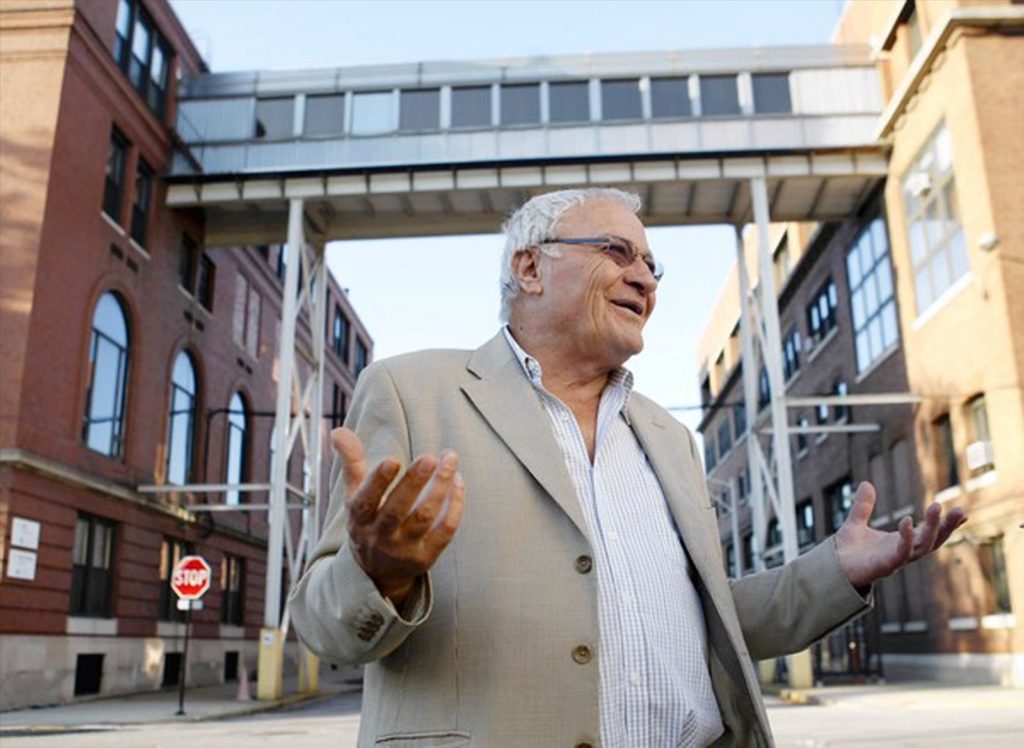
*Founder Nick Mirkopoulos
The Cinespace Film Studios in Toronto are known for hosting many hit
TV series and films, including “Chicago,” which won an Oscar for best
picture, and “Handmaid’s Tale,” a Hulu series that won a 2018 Golden
Globe nomination for best actress. With such a huge success, Nick wanted
to expand.
At the same time, his nephew Alex Pissios and his wife Patricia,
along with their four children, were in a tough situation with the real
estate collapse and were facing bankruptcy and eviction from their
family home.
It was at a cousin’s wedding that Alex and Nick, an uncle he barely
knew, struck up a conversation that led to a huge change in both their
lives. Nick paid off Alex’s 11 million dollar debt and the two struck up
a family partnership, launching Cinespace Film Studios in Chicago.
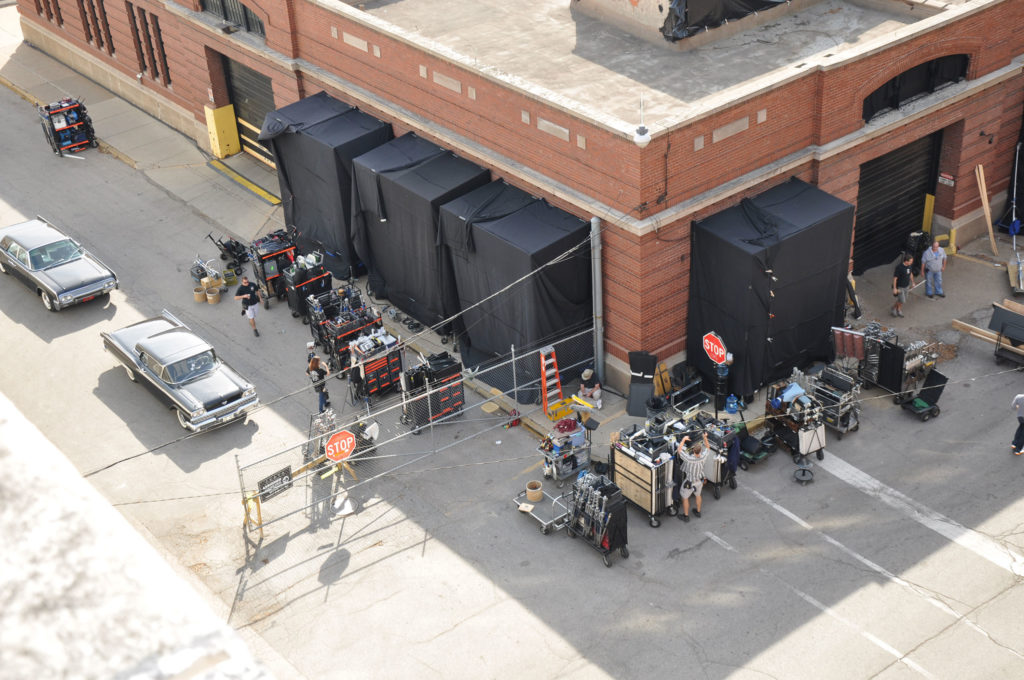
Today, Cinespace Chicago brings Hollywood to Chicago, specialising in
the development, management and operation of studio space and support
facilities for the film, television, and digital media production
industry.
Pissios claims Cinespace has helped create 7,500 film-related jobs
since it opened and has contributed billions of dollars in revenue to
the local economy.
Cinespace is now home to producer Dick Wolf’s successful “Chicago”
franchise — Chicago Med, Chicago Fire and Chicago PD, as well as TV
shows Empire and Shameless, and productions from Netflix, Amazon and
Hulu. Several feature films have also been produced here, including
“Divergent” and “Batman v Superman: Dawn of Justice.”
In 2015, Cinespace Chicago launched an incubator for filmmakers
called Stage 18 to provide workspace, programming and event space to
help develop the local filmmaking community. Its goal is to keep local
talent from leaving for opportunities in Los Angeles and New York City,
and also organises events such as script feedback for budding
filmmakers, plus the opportunity to pitch projects to investors.
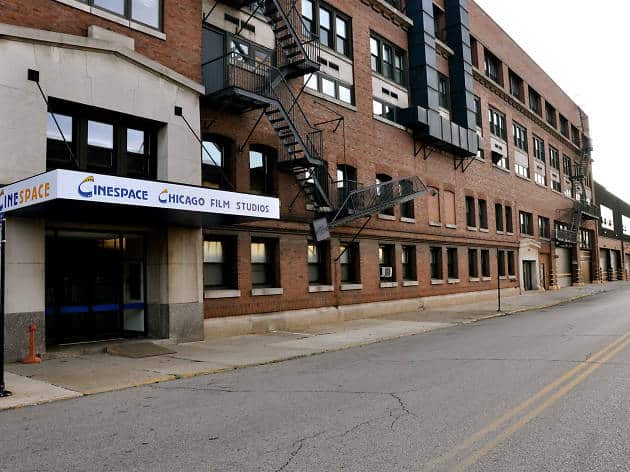
Cinespace studio Chicago
To give back to the community, Cinespace Chicago also expanded and
offers nearby DePaul University space for classes that teach filmmaking
to the next generation of artists, as well as establishing the CineCares
Foundation, providing Chicago residents with education and job training
in TV and film. The family is very charitable and are always willing to
support the community.
Pissios looking ahead into the future, says his dream is to create a
back lot on Cinespace’s property where building façades can be made to
look like New York City brownstones or cities like London and Paris. It
would be the only back lot outside of Los Angeles, and he says it would
save filmmakers time and money by eliminating the need to shoot on
location.
For the moment though, Pissios never loses sight of one of the
biggest lessons he learned from his late uncle, who passed away in 2013.
“He always told me to do things from my heart,” he says. “Nick was a
very stern and smart businessman. He didn’t give handouts; he gave
people opportunities. If he believed in you, he gave you a chance,
always.” In his office, Pissios keeps a framed copy of his eviction
notice, a gift from Uncle Nick. “He wanted me to remember where I came
from, and I do,” he points out. “Every day, I come to work with a smile
on my face, and I try to find ways to pay this forward.
12.06.2019
“... Independent, handmade, and made possible with countless fights on the side of its creator, December Riots, comes to remind us the life we never lived, the fight we never fought and the reasons we got here, with bowed heads and humiliated lives ..."
The film, featuring tracks by electronic music superstar Moby, focuses on the murder in cold blood of 15 year-old student Alexandros Gregoropoulos by two policemen on December 6, 2008. The incident sparked riots in over 70 cities worldwide. In the clip MURDER 101 actresses Vivian Ioannou and Maria Floratou and are resolving some differences from the not the so distant past. In the clip Marina/DJ Lightdust (Lucy Lemos) and Michael (Michael Angels) are pondering their next move together. The film follows, in parallel action while the gruesome reality of December riots unfolding, seven different characters trapped in a subterranean arthouse cinema during the riots, a bunch of characters that despise and hate each other to death. And are afraid to go out and stay put. More on decemberriots.com Description Filming of “December Riots" wrapped in Athens, while a second wave of riots swept Greece on December 6th 2010, marking the two-year anniversary of the cold-blooded execution of 15 year-old student Alexander Gregoropoulos by two policemen in a downtown Athens café. "December Riots," a film about the Gregoropoulos killing and the 2008 riots that followed, is produced, and directed by Dimitri Vorris.
The filmmaker acquired exclusive access to many never-before-seen court documents and evidence from the trial that followed Gregoropoulos’s killing. Plot Outline The claustrophobic thriller focuses on a group of Europeans and Americans trapped in an art-house movie theater in downtown Athens during the 2008 riots. 23 year-old British actress Lucy Lemos, prolific actor Abraham Papadopoulos, popular comedian-director Nikos Yannikas anchor a youthful and talented supporting cast that includes Vivian Ioannou, Aris Athan, Nasos Pappas, Michael Angels, Louise Rheas, Aris Papargyropoulos, Maria Floratou, Kostas Antalopoulos.
THE SONDERKOMMANDO REVOLT AT DEATH CAMP AUSCHWITZ-BIRKENAU WAS ORGANIZED
BY SALONICA JEWS: ...One action will stand out alongside the Warsaw
Ghetto Uprising and that is the Revolt of the Sonderkommando in
Auschwitz-Birkenau on October 7, 1944. This was an uprising in which
Sephardi and Greeks Jews both helped plan and execute and left a
memorable list of heroes and martyrs to posterity. Their victory was
dual: it was a psychological victory over the Nazis who now feared the Jews
in the camps and hastened their declining confidence in winning or even
surviving the war and secondly, they died as free men in the tradition
of Greek noble death, an outcome that has become part of western
tradition, namely to fight against all odds until the very end and deny
the enemy the opportunity to loot and gloat. The world forgets not only
that Sephardic Jewry suffered during the Holocaust too, but that Jews
were brave enough to revolt and fight under the most hopeless
circumstance They are hungry, tortured, abused, sick, ailing, armed only
with an ingenious plot and self-made guns and explosives. Against the
Empire of the Third Reich. They are performing the ultimate sacrifice
for their fellow man and woman.
When Quentin Tarantino debuted in 1992 with Reservoir Dogs, and even more so when he followed it up with the cinematic phenomenon that was PulpFiction,
the viewers most dubious about the young auteur's cultural staying
power dismissed his movies as elevations of style over substance.
Whether or not Tarantino has converted all his early critics over the
past 27 years, he's certainly demonstrated that style can constitute a
substance of its own. Even many who didn't care for his latest picture, this year's Once Upon a Time in Hollywood,
nevertheless expressed gratitude at the release of a lavish,
large-scale film packed full of ideas, references, set pieces, and jokes
— an increasingly rare achievement, or even aspiration, among
non-Tarantino filmmakers. How does he do it? The Director's Chair profile video above, and the accompanying Studio Binder essay by Matt Vasiliauskas, identifies the essential elements that constitute the Tarantinian style and Tarantinian substance. http://www.openculture.com/2019/10/quentin-tarantino-explains-how-to-write-direct-movies.html
Martin Scorsese filming The Irishman with Robert De Niro in Ridgewood, New York The Irishman is an American biographical crime film directed by Martin Scorsese and written by Steven Zaillian, based on the book I Heard You Paint Houses by Charles Brandt. The film stars Robert De Niro, Al Pacino, Joe Pesci, Anna Paquin, Bobby Cannavale, Harvey Keitel, and Ray Romano. The film is tentatively set to be released by Netflix in 2019.
Robert Anthony De Niro Jr. is an American actor, producer, and director who holds both American and Italian citizenship. De Niro was cast as the young Vito Corleone in the 1974 film The Godfather Part II, for which he won the Academy Award for Best Supporting Actor. His longtime collaboration with director Martin Scorsese earned him the Academy Award for Best Actor for his portrayal of Jake LaMotta in the 1980 film Raging Bull. He received the AFI Life Achievement Award in 2003, the Golden Globe Cecil B. DeMille Award in 2010, and the Presidential Medal of Freedom from President Barack Obama in 2016.
Martin Charles Scorsese is an American director, producer, screenwriter, and film historian, whose career spans more than 50 years. Part of the New Hollywood wave of filmmaking, he is widely regarded as one of the most significant and influential filmmakers in cinematic history. He is a recipient of the AFI Life Achievement Award for his contributions to the cinema, and has won an Academy Award, a Palme d'Or, Cannes Film Festival Best Director Award, Silver Lion, Grammy Award, Emmys, Golden Globes, BAFTAs, and DGA Awards.
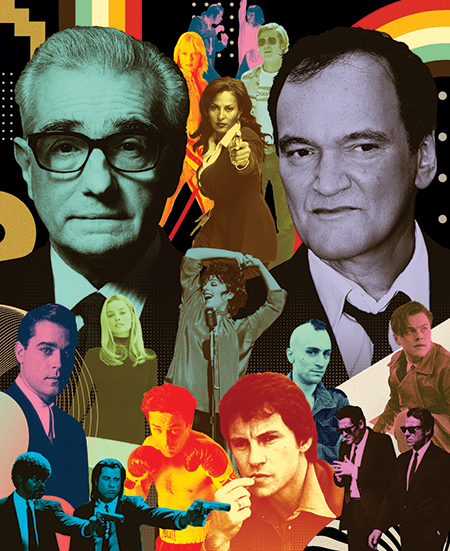
Martin Scorsese and Quentin Tarantino
are born storytellers, not just in their movies—which bear each
director's unmistakable stamp—but in their deep-seated appreciation for
the medium. While they hail from different generations—Scorsese was
among the first wave of film school grads in the mid '60s, and
Tarantino's rise coincided with the indie film revolution of the early
'90s—their passion and knowledge of cinema place them on equal footing.
No genre escapes their grasp, whether it's prestige studio releases or
B-movie potboilers, splashy musicals or noirish thrillers, art-house
fare or spaghetti Westerns. They've been dining on this grand buffet all
their lives, and it shows in their own work, in the characters they've
created, and the lens through which they view the world. This is a
particularly conspicuous year for both filmmakers: Tarantino's Once Upon a Time… in Hollywood has galvanized critics and audiences alike since its debut at Cannes, while anticipation runs high for Scorsese's The Irishman,
for which the director has spent considerable time in post dealing with
digitally de-aging his leads. The two sat down for the DGA Quarterly
to talk directors, influences and violence as catharsis, among other
topics. This is an edited version of their conversation. –Steve
Chagollan
For screenwriters working on assignment – and TV writers working on
pilots – an existing WGAW tool can be especially helpful in confronting
the twin problems of free work and late pay.
The Start Button
is a simple way to record when you begin working on a draft and when
you hand it in. It helps the Guild protect writers from abusive requests
for unpaid rewrites and delayed checks. I made a little video to walk writers through how the Start Button
works, and why members should make it standard practice when beginning
an assignment.
READ MORE HERE https://johnaugust.com/2019/getting-started-with-the-start-button
.. The great Hollywood portrait photographs are like close-ups that never end. Cinema is an art of faces, and the chance to gaze at them, to get lost in them, may be the deepest thrill movies offer. In the darkness of the theater these faces are vast, glowing, isolated, but fugitive; still photographs extend these moments, make them permanent. Hollywood grasped this value early on, in the days when after their runs in theaters films would often vanish forever...
READ MORE:
https://www.criterion.com/current/posts/6365-shooting-stars
It can be hard to understand exactly how agency packaging fees and
producing impacts writers’ salaries. This short explainer video does a
great job visualizing the issues, and looking at why the WGA is in
negotiations to address agency conflicts of interest.
Hollywood talent agencies have a business model rife with conflicts of
interest. This means they do what’s best for them, even if it’s not best
for their clients. These conflicts hurt writers. The situation is bad,
and it’s getting worse.
To find out what the WGA is doing about it, go to WGA.org.
"If I was white I would have been like John Wayne... I feel like a tragic hero in a Shakespeare play" - Tupac Shakur
Interview by Benjamin Svetkey
March 1994.
Microcassette recorder.
Related profile appeared in Entertainment Weekly.
"The only way you can be a mark is if you want something for nothing. If
you're greedy, you're set up." - Maya Angelou, as told to Studs Terkel
in 1970
"The things that really scare us are the things that are going on just
outside the spotlight that you can’t quite see" - Stephen King on
October 22, 1989
The author takes us on a journey back to his childhood and the roots for
his decades crafting memorable horror fiction.
Learn more about Stephen King's theory on evil and horror, the films
made from his books, and his brilliant Twitter feed: http://blankonblank.org/stephen-king Interview originally aired on the Public Radio Book Show and it comes to
us courtesy of WAMC Northeast Public Radio and the New York State
Writers Institute.
Subscribe for new episodes every other Tuesday... it's free:
http://bit.ly/1TO2vCL
Thanks to Andreas for sending in word that Koch Films has announced a DVD/Blu-Ray Region B release of Brian De Palma's Domino, coming August 22, 2019. With Domino being released in theaters in Hungary May 30th, and in theaters in Italy on June 20th, and, of course, in California and New York on May 31st, we are keeping an out for any other theatrical releases out there.
(Above, with De Palma directing actress Sachli Gholamalizad). With info from: http://www.angelfire.com/de/palma/blog/
John August: Hi, I’m John August. Michele Mulroney: And I’m Michele Mulroney. John August: We’re members of the WGA West Board and the Agency Negotiating Committee. Michele Mulroney:
And we’re both primarily screenwriters. That’s why we wanted to take a
few minutes to talk about some of the issues affecting screenwriters in
this time when most of us are working without agents. John August:
Some of these issues are new, but some have gone back decades. Over the
past two years, we’ve met with hundreds of screenwriters at lunches and
meet-ups. And the message has been clear: the Guild needs to be doing
more to combat free work and late pay, because our agencies aren’t. Michele Mulroney:
Time after time we’ve heard horror stories of 60-page treatments
written for free. Checks that are six months late. And we’d ask, “Where
are your agents? Why are they letting this happen?” John August:
It happens because it’s largely invisible. Most screenwriters, we work
alone. And we’re afraid to complain, because we might be labeled
“difficult.” Difficult is a code word for standing up for yourself. Michele Mulroney:
The thing is, screenwriters are not alone. The Guild can and should be
the bad guy on behalf of screenwriters. It can step in to file claims
and collect interest on late pay. It can help to fight back against free
work. But the Guild can’t enforce contracts it doesn’t see. John August:
That’s why the agency Code of Conduct requires agencies to provide the
Guild with our contracts and invoices. Once the Guild has this
information, we can protect not only individual screenwriters but all of
us. We can identify patterns, see where there are shortfalls in writer
income, and shape proposals for future MBA negotiations. Michele Mulroney: Next, we want to talk about agency-affiliated production companies. This is where your agency owns or co-owns its studio. John August:
To me, this is the next step beyond packaging. These agencies don’t
want 10% of a writer’s salary; they don’t want the 10% of the backend
they’d get with packaging. They want 50 to 60% of the profits. They want
to own the property. And to do that, they turn you from a client into
an employee. Michele Mulroney: Right now, we have
Wiip, Endeavor Content, and Civic Center Media. Members ask us, “Why
did the Guild ever let these companies become signatories?” The answer
is, we want more buyers, particularly in film. We want these companies
to thrive. We just don’t want them to be owned or controlled by
agencies. John August: Let’s talk about why
agency production companies are bad for screenwriters. Let’s say you
have a spec script. Your agency is going to take it out on the town. But
if they have their own studio, realistically, they’re going to take it
there first. Maybe that company wants to buy it. Great! As a
client, how do you know your agent is getting the best deal for you?
When your agent is also the buyer, that’s the clearest conflict of
interest imaginable. Michele Mulroney: Or, maybe
the company doesn’t want to buy your spec script. That’s awkward. Your
own agency’s affiliated studio is passing on your project. So how
exactly is that helping you as a client? John August:
Spoiler: It’s not. But for screenwriters, it gets even worse when it’s
not your original project. These little mini-studios, they’re buying IP.
They’re competing with you for the rights on books. If you’re a
screenwriter who wants to get hired on that book adaptation, you better
be represented by that agency. Michele Mulroney:
This isn’t a hypothetical, by the way. We checked the receipts. 75% of
writers creating projects at affiliated studios, they’re CLIENTS of that
agency. They’re keeping the work in house. It’s like the old
studio system. John August: But kind of worse in a
way. I don’t want a future where we’re negotiating the terms of our MBA
with our own agencies sitting across the table. Michele Mulroney:
Next, let’s talk about indie film. We heard screenwriters loud and
clear when you said you wanted us to keep as much of the indie film
ecosystem intact as possible. John August: Our
Code of Conduct allows agencies to continue to provide financing and
sales services to their clients. It also insists on full transparency
and consent, so screenwriters can see any fees the agency would take on
their project. Michele Mulroney: And to clarify a
point of confusion in the Code of Conduct: agencies can take these
fees — subject to the writer’s approval — on projects with an intended
budget under $20 million. For budgets over $20 million they will need a
waiver from the Guild after they have consulted with the screenwriter. John August:
This is not meant to be a roadblock, but a reality check. We don’t want
studio features masquerading as indies, and we don’t want packaging
fees in features to become the kind of problem we are fighting in TV. Michele Mulroney:
So how do we screenwriters navigate this period of displacement?
Especially those of us who don’t have managers or robust networks to
rely on. John August: Unlike in TV, screenwriters
don’t hire each other. We have to make sure that screenwriters still
get read and hired by producers and studio executives. We need make sure
pitches and specs still sell. To do that, the Guild has put in place
several new tools that can all be accessed via the Guild website. Michele Mulroney:
First, we recently launched the Weekly Feature Memo. It goes out every
Friday to a list of around 750 producers and development executives.
Writers simply upload the logline for their spec or pitch and then
producers can contact you to request your spec, set a pitch meeting or
a general. John August: Next, without an agent,
how do producers and executives find you? The Find a Writer directory is
the easiest way. Four things you should do today: Check that your
credits are accurate. The system will only list your final Guild
credits, so if you’d like to include development credits or animation,
for now, list them in your bio section. Upload a writing sample if
there’s something you’d like buyers to be able to read. Opt-in to
letting producers and executives contact you via email. Finally, mark yourself as “available” if you’re open to work. Michele Mulroney:
Agencies traditionally keep lists of Open Writing Assignments. In the
next couple of weeks, the Guild will be launching its own Open Writing
Assignment Memo. Here, producers will submit details of any OWA’s,
including pieces of IP in search of a writer. The Guild will distribute
this to screenwriters in a weekly memo. Then, sort of like the staffing
submission system, you will be able to submit yourself for these
opportunities. We’ll of course make sure the process is user-friendly
and easily sortable on the producers’ end. John August:
Once you’re hired on a project, we’d strongly encourage you to use the
Start Button. The Start Button lets the Guild know what screenwriters
are working on, and follows up to make sure you’re getting paid on time,
and not being asked to do free work. Particularly in this period
without agents, the Start Button can be an important tool for tracking
your work. Michele Mulroney: Finally, the Guild
will be hosting an Indie Film Panel at the end of the month, featuring
fellow Guild members with extensive experience in indie film, along with
producers, financiers, and sales and distribution panelists to discuss
making features without agencies. So if you’re in the indie world,
please join us. John August: Now, even with all
these tools and all of the hustle we’re seeing from screenwriters,
anxiety is natural. It’s inevitable. Especially for early-career
screenwriters and those without deep networks and connections. So how
can we best support our most vulnerable screenwriters during this time? Michele Mulroney:
First, share what you read. Pass along a script to producers and
executives you know. Read early-career screenwriters and give them
a boost. John August: If a screenwriting
assignment comes across your radar and you can’t take the job, consider
sharing the info with other writers or…recommend a less-established
screenwriter who might not be on their radar. Michele Mulroney:
Be as generous as you can in offering advice, guidance, contacts and
resources. Those of us who have been around for a while have a lot of
open doors…Maybe your open doors can open a door for another
screenwriter. John August: And finally, please
don’t hesitate to reach out to any member of the Board, Council, or
Negotiating Committee. We’re here to listen. We need to hear your ideas,
criticisms and concerns. All the tools we’ve talked about today came
directly from screenwriters reaching out to us. Michele Mulroney:
One place you can do this is at the May Wednesday evening mixers at the
Guild. It’s a chance to mingle, network, and have one-on-one
conversations with your elected leadership. John August: This campaign’s success depends on us all hanging together, staying strong, and helping one another as best we can. Michele Mulroney: The union is us and we are the union. Thanks for listening. John August: Thanks. It
is inspiring to see the resolve of the Guild membership not only stick
together in this dispute, but also generate work-arounds to help writers
promote their work and hopefully land gigs without the aid of the
agencies. If that effort succeeds, one would think it would compel the
ATA to rethink their obstinate ‘bargaining’ position. Indeed, the
Guild’s tactics seem to be working if this news is any indication. To watch the video, go here.
Greek prosecutors have filed charges against 20 people over deadly wildfires in 2018. The
accused, including the greater Athens regional authority chief, two
local mayors, the former civil protection head and fire service
officials, were hit with charges that reportedly include involuntary
manslaughter, causing bodily harm due to neglect, and arson through
negligence. The July 23 fire in Mati killed 100 people, injured 250, and burnt to the ground over 2.500 houses leaving the seaside resort town devastated. The disaster led to a series of resignations or sackings of fire and police chiefs. Most of the victims died in traffic jams as they fled, while others drowned escaping into the sea.
Felix L.A., an art fair that opened its inaugural edition Thursday
(February 14) and continues through Sunday (February 17), includes a Brian De Palma double feature tonight at 8pm, when Blow Out and Dressed To Kill
will be screened at the David Hockney Pool. The pool is located in the
Hollywood Roosevelt Hotel, where the first Oscars ceremony was held in
1929. A Bloomberg article by Katya Kazakina provides some context for the location, the fair, and how it connects with other fairs happening this weekend in Los Angeles:
Three months after David Hockney’s
swimming pool canvas sold for $90 million, the art world is gathering
around an actual pool the British artist painted at the Hollywood
Roosevelt Hotel. Hockney decorated the pool’s bottom with blue
swirls in 1987, almost six decades after the historic Los Angeles
building hosted the first Academy Awards ceremony in 1929. This week,
the surrounding cabanas will exhibit works by local and international
artists as part of a new art fair called Felix.
The event,
co-founded by former Walt Disney Co. executive Dean Valentine, is among
at least six art fairs taking place as the city vies to become an
art-market epicenter, something that has eluded Los Angeles despite
being home to major artists, patrons, art schools and institutions.
Frieze, which hosts art fairs in London and New York, will debut this
week at Paramount Pictures.
“Los Angeles has always had the
artists,” said Valentine, 63, rattling off legends such as Ed Ruscha,
John Baldessari and Chris Burden. “Now there’s more art market
infrastructure here. It’s firing on all cylinders.”
International players including Hauser & Wirth and Sprueth Magers
joined L.A.’s vibrant, but decentralized, gallery scene in recent years,
though some upstarts have since closed. Billionaire Eli Broad and the
brothers behind Guess jeans, Maurice and Paul Marciano, opened private
museums.
Southern California collectors used to head to New York
and Basel to buy art, but now “collectors from all over the world are
coming here because the art scene is so exciting,” said Jeffrey Deitch, a
dealer and former director of the Museum of Contemporary Art in Los
Angeles. In September, Deitch opened a local gallery because he “saw an
international market.”
Frieze will emphasize Los Angeles by
giving prominent space to local galleries and offering VIPs a program
that includes visits to studios as well as conversations with artists
and collectors living in the area.
“We know that L.A. likes to
tell stories about itself,” said Bettina Korek, executive director of
Frieze Los Angeles, which will host 70 galleries.
At Blum & Poe’s booth, Dave Muller will create a site-specific mural, titled “Oh Hollywood.” David Kordansky will have a solo presentation of Kathryn Andrews,
whose works feature film props and sleek surfaces, a hybrid of Pop art
and minimalism. Landscapes and cityscapes of California by 98-year-old Wayne Thiebaud,
as well as his iconic pastry images, will be the focus of New York’s
Acquavella Galleries, with prices ranging from $350,000 to $5 million.
Deitch will present abstract works by Judy Chicago, painted during her L.A. sojourn. Hauser & Wirth will stage the U.S. debut of “Unisex Love Nest,” a 1999 installation by Mike Kelley, a South Pasadena-based artist who died in 2012. The asking price is $1.8 million. At
Felix, 41 galleries will present paintings, sculptures and video art in
hotel rooms and around the Hockney pool. The setting draws inspiration
from an earlier era of art fairs: in 1994, the Armory Show took place at
the Gramercy Park Hotel in New York and the Chateau Marmont in L.A.
“It was amazing,” Valentine said, recalling works by Damien Hirst, Tracey Emin and Thomas Schutte. “You walked from room to room, bumped into other collectors in the hallways and then had a drink at the bar.”
Some say that sense of discovery, fun and intimacy is largely absent from the relentless art fair circuit these days.
“It’s become this mega shopping experience,” Valentine said. “I find it
hard to get into.” Felix is an attempt “to replicate the things that
are missing from the art world,” he said. “More intimate, conversational
and fun. Less hyper-capitalistic.”
Felix
joins two established L.A. fairs, Art Los Angeles Contemporary (now in
its 10th year) and stARTup (hosting its fourth L.A. fair), as well as
heavy-hitting newcomer Frieze, the influential London-based fair that is
seen as the linchpin of what is sure to be the city's most robust arts
week ever (all four fairs wrap on Feb. 17). Valentine, a board
member of the Hammer Museum, says the choice of the hotel format is
meant to evoke the storied but short-lived Gramercy International Los
Angeles at the Chateau Marmont in the mid-1990s, considered by some
gallerists and collectors to be a key inflection point in L.A.'s
emergence as an art city. The Roosevelt also has its own associations:
It was the site of the first Academy Awards in 1929. And many rooms,
including those being put to use by Felix, overlook the Hollywood Walk
of Fame and the Chinese Theater. Valentine hopes the varied spaces and
presentations at the hotel will give visitors “the surprise of turning a
corner” and finding an unexpected object, moment or connection with
another art lover. The name "Felix" came in part from
one of Valentine's favorite cartoon characters, Felix the Cat; it's also
a nod to a favorite painting, Paul Signac's seminal portrait of the 19th-century art critic and anarchist Felix Feneon. The allusion to anarchy may be apt because Felix is being produced somewhat on the fly,
especially compared to Frieze, which has spent years laying a
foundation for its expansion to Southern California and has a
well-oiled, well-heeled and market-savvy operation (as well as majority
owner Endeavor) behind its presentation of 60 galleries.
...Soldiers of the 60th Army of the First Ukrainian Front opened the gates
of Auschwitz Concentration Camp on January 27, 1945. The prisoners
greeted them as authentic liberators. It was a paradox of history that
soldiers formally representing Stalinist totalitarianism brought freedom
to the prisoners of Nazi totalitarianism. The Red Army obtained detailed information about Auschwitz only after
the liberation of Cracow, and was therefore unable to reach the gates of
Auschwitz before January 27, 1945.
..... As Steven Spielberg – who is credited with having brought
the story of the Holocaust to a far wider audience with his 1993 picture
Schindler’s List and whose Shoah Foundation has collected the testimony
of 53,000 Holocaust witnesses – told an audience of survivors gathered
at a Cracow hotel on the 70th anniversary of the liberation, four years, ago that the “call to remember” was
increasingly
important at a time of rising anti-Semitism and Holocaust
denial. “We’re
once again facing the perennial demons of intolerance - anti-Semites,
radical extremists and religious fanatics that provoke hate crime.”
This month, Twitch is presenting a marathon streaming of classic Doctor Who episodes.
Continuing through January 25th, they plan to broadcast "11 to 12 hours
of new episodes per day (~27 episodes), repeating once so you can catch
Doctor Who nearly 24 hours a day, every day..." Stream the episodes here on Twitch. https://www.twitch.tv/twitchpresents
Ringo Lam was the director of such classics as "City on Fire", "Prison on Fire" and "Full
Alert". Ringo was part of Hong Kong’s New Wave movement from the late
80’s to early 90’s that put Hong Kong cinema on the map and made it an international phenomenon. A true maestro of film...
Hong Kong media outletsreported the director, who was born Lin Lingdong, was found unresponsive in bed on Saturday by his wife. He was 63. The 1986 “City on Fire” is considered a landmark film about Hong Kong
triads, and won best director at the Hong Kong Film Awards. It was a
major influence on Quentin Tarantino’s “Reservoir Dogs.” Lam followed that film up with “Prison on Fire” and “School on Fire.” “Tarantino has never tried to hide his love for ’70s cinema, and this
is part of what makes his take on ‘City on Fire’ so interesting,” wrote IndieWire in an explanation of Tarantino’s influences. With several “Reservoir Dogs” shots recalling “City on Fire,” such as
the image of four men in black suits and a man shooting a cop with with
two guns, cinephiles have questioned whether Tarantino’s references
were homage or rip-off... Source: Variety
...Εκατοντάδες χιλιάδες ΄Ελληνες έχουν χύσει το αίμα τους για να ξεκουμπισθούν οι φασίστες και οι Ναζί από την Ελλάδα από τον Β' Παγκόσμιο Πόλεμο μέχρι σήμερα, συμπεριλαμβανομένων και των παπούδων μου... Οχι όμως και ο Απόστολος Βακάκης, ο υποτίθεται, πιο επιτυχημένος ΄Ελλην επιχειρηματίας, και η αυλή του από ότι φαίνεται! Τα Jumbo, υποτίθεται και πάλι, είναι η πιο πετυχημένη "ελληνική" εταιρεία. Με, υποτίθεται και πάλι, σχεδόν 500.000.000 ευρώ σε καταθέσεις μετρητών. Υποτίθεται!!! Στελεχωμένη με... κορυφαία στελέχη, που υποτίθεται ότι έχουν διεθνείς "περγαμηνές"....
... υποτίθεται και πάλι που τους ξέφυγε ο Aδόλοφος Χίτλερ και το σύμβολο των Ναζί, στη σφραγίδα της Luftpost, από σακούλα που ήδη πουλήθηκε έναντ 0,50 ευρώ σε δεκάδες χιλιάδες κομμάτια...και λέγεται CRAFT LONDON!--τι σχέση έχει με το Big Ben και το Λονδίνο, η πεταλούδα, το Τρίτο Ράιχ, ο Χίτλερ, μόνον το "θολωμένο" management των Jumbo μπορεί να απαντήσει...Tελικά μετά τον σάλο θα αποσύρουν τη σακούλα οι αθεόφοβοι, αν και, γνωρίζοντας την προιστορία τους, μάλλον το έκαναν επίτηδες, πιστεύοντας ότι θα περάσει απαρατήρητο από τους καταναλωτές που τρώνε...σανό και κανείς δεν θα τολμήσει να διαμαρτυρηθεί! Μια ακόμη απόδειξη ότι δεν έχουμε ελπίδα ως χώρα και είμαστε εντελώς καταδικασμένοι!....
"Yojimbo" by Akira Korosawa and "A Fistful Of Dollars" by Sergio Leone.
...Kurosawa wrote Leone a letter: 'You made a very good movie, but it's not your movie.' Leone's response was: 'Omg, I got a letter from Kurosawa!!' Rather than realizing he was in for some legal problems....Anyway. Both movies were masterpieces. Yojimbo was based on a Dashiell Hammett novella called "Red Harvest", according to a few scholars, in which the protagonist was a depression era thug in a gangster war in a western town.
BC: You said earlier that all you are really capable
of doing is creating films, not explaining them or how they are
supposed to be made. And, of course, someone like me comes at films from
the opposite perspective. Could you say a bit more on this subject? AK: Critics take my work and say things about it
such as, “This scene in Kurosawa’s film means such-and-such.” But it’s
not true! I was not thinking of that at all! Really, my films are
created in a totally natural way; I just film them as I go along. They
may turn out to affect people in a certain way, but I don’t create films
by rationalizing my thoughts and then putting them on celluloid. My way
of creating, my style if you want to call it that, is something that I
was born with: it comes naturally. …
In sum, I don’t think the “messages” of my films are very obvious.
Rather, they are the end products of my reflection; my views are thus
implicit in any finished work because I, the creator, am a living,
thinking human being who lives now, in the present. I am not consciously
trying to teach a lesson or convey a particular message, to express any
philosophical or political views, since audiences don’t like that. They
are sensitive to such things, to such “sermons,” and rightly shrink
from them. People go to see films to enjoy themselves, and I think that I
have made them aware of certain problems without their having had to
learn about them so directly. …
BC: One can divide your films schematically into two categories: gendai-geki (modern film stories) and jidai-geki
(historical film-stories). Is this distinction connected to a precise
intention on your part in the formulation of a scenario and in the
filming of it?
AK: I myself do not perceive any difference. The only advantage of historical film stories, with the possible exception of Throne of Blood,
comes from their greater potential for spectacle. … For myself,
action-adventure is spectacle in the historical film story, whereas
adventure in a modern film story is more often of a metaphysical, moral,
and social kind.
What really interests me is the interior or exterior drama of a
person and how to represent that person through his particular drama. To
describe a person effectively, for instance, a social or a political
context is necessary. Moreover, I don’t think that one should depict
events of the present day in a coarse manner; the public is shocked if
it is plunged coarsely into contemporary reality. One can only make the
public accept such a reality through indirect means: the story of a
person living in this world. I would make a similar remark with regard
to your classification: it is somewhat schematic. Gendai-geki and jidai-geki
are different genres, but the subject always determines the form. And
there are subjects that one can treat more readily in the form of jidai-geki. BC: Like Rashomon, which some have called a “modern” film that has an “historical” context. AK: Yes. To repeat: I, Kurosawa, live in modern society. Thus it is normal that my “historical” films contain “modern” dimensions. BC: For you, isn’t Rashomon an “historical” film in the cinematic sense, too? AK: Yes, I think it is, and the historical reference
here is silent film. Since the advent of the talkies in the 1930s, I
felt at the time of Rashomon‘s conception, we had forgotten what was so wonderful about the old silent movies. … Rashomon would be my testing ground, the place where I could apply the ideas and desires growing out of my silent-film research. (From: Akira Kurosawa: Interviews, 174-176)
Additionally, the 1993 interview with Fred Marshall includes the following comment:
Q: How do you go about expressing the Truth in your films? A: I must find a way to put it across, but it’s
difficult to raise money by speaking the truth to your contemporaries.
It’s easier to depict Japanese history and express its cultural
values. I have to emphasize, however, that it is not my intention to
impose my specific philosophy on a film. If I had a message or thesis to
express, I could do so in words, and it would be much cheaper and
quicker to paint those words on a sign and carry it around for all to
see. (From: Akira Kurosawa: Interviews, 184-185)
What is an art film? And what are the important elements of an art film? Wolfcrow explains why Rashomon is probably the greatest art film ever.
And walks the very thin line between truth and lies... And for Rashomon fans - the mystery is solved! The solution to what really
happened that afternoon, with clues from the great Akira Kurosawa
himself! "Rashomon": Murder Mystery? Thriller? Ghost Story? See for yourself... Why movies are entertainment + Story behind the screenplay of Rashomon +
Macbeth quote, etc.: https://wolfcrow.com/blog/rashomon-ho... Focal Lengths Kurosawa used: https://youtu.be/UsuT2wjvZTo
....Hollywood legend Barbara Stanwyck saddled up with
writer-director Samuel Fuller ( "I Shot Jesse James", "Hell and High Water", The Baron of Arizona), for the pulp maestro’s most audacious
western, a boldly feminist spin on the genre that pivots effortlessly
between ribald humor, visceral action, and disarming tenderness.
High-riding rancher Jessica Drummond (Stanwyck) commands a forty-strong
posse of cowboys, ruling Cochise County, Arizona, without challenge.
When U.S. Marshal Griff Bonell (Barry Sullivan) and his brothers arrive
in town with a warrant for one of her hired guns, Jessica begins to fall
for the lawman even as he chips away at her authority. With astonishing
black-and-white CinemaScope photography, hard-boiled dialogue laced
with double entendres, and a fiery performance by Stanwyck at her most
imperious, Forty Guns is a virtuoso display of Fuller’s sharpshooting talents.
New 4K digital restoration, with uncompressed monaural soundtrack on the Blu-ray
New interview with director Samuel Fuller’s widow, Christa Lang Fuller, and daughter, Samantha Fuller
A Fuller Life
(2013), a feature-length documentary by Samantha Fuller about her
father, featuring filmmakers Wim Wenders, William Friedkin, and Monte
Hellman; actors Mark Hamill, James Franco, Jennifer Beals, Bill Duke,
and Constance Towers; and others
Audio interview with Samuel Fuller at London’s National Film Theatre from 1969
New interview with critic Imogen Sara Smith, author of In Lonely Places: Film Noir Beyond the City
Stills gallery
PLUS: An essay by film scholar Lisa Dombrowski and a chapter from Fuller’s posthumously published 2002 autobiography, A Third Face: My Tale of Writing, Fighting, and Filmmaking
One of a string of late-career masterworks made by Kenji Mizoguchi (A Geisha, The Love of Actress Sumako, Flame Of My Love, The Woman In The Rumor, Tales of Taira Klan) in the first half of the 1950s, A Story from Chikamatsu (a.k.a. The Crucified Lovers)
is an exquisitely moving tale of forbidden love struggling to survive
in the face of persecution. Based on a classic of eighteenth-century
Japanese drama, the film traces the injustices that befall a Kyoto
scroll maker’s wife and his apprentice after each is unfairly accused of
wrongdoing. Bound by fate in an illicit, star-crossed romance, they go
on the run in search of refuge from the punishment prescribed them:
death. Shot in gorgeous, painterly style by master cinematographer Kazuo
Miyagawa, this delicately delivered indictment of societal oppression
was heralded by Akira Kurosawa as a “great masterpiece that could only
have been made by Mizoguchi.” A Story from Chikamatsu was restored by Kadokawa Corporation and The Film Foundation with the cooperation of the Japan Foundation.






 ... υποτίθεται και πάλι που τους ξέφυγε ο Aδόλοφος Χίτλερ και το σύμβολο των Ναζί, στη σφραγίδα της Luftpost, από σακούλα που ήδη πουλήθηκε έναντ 0,50 ευρώ σε δεκάδες χιλιάδες κομμάτια...και λέγεται CRAFT LONDON!--τι σχέση έχει με το Big Ben και το Λονδίνο, η πεταλούδα, το Τρίτο Ράιχ, ο Χίτλερ, μόνον το "θολωμένο" management των Jumbo μπορεί να απαντήσει...Tελικά μετά τον σάλο θα αποσύρουν τη σακούλα οι αθεόφοβοι, αν και, γνωρίζοντας την προιστορία τους, μάλλον το έκαναν επίτηδες, πιστεύοντας ότι θα περάσει απαρατήρητο από τους καταναλωτές που τρώνε...σανό και κανείς δεν θα τολμήσει να διαμαρτυρηθεί! Μια ακόμη απόδειξη ότι δεν έχουμε ελπίδα ως χώρα και είμαστε εντελώς καταδικασμένοι!....


