1.27.2019

JANUARY 27, 2019 MARKS THE DAY OF THE LIBERATION OF AUSCHWITZ CAMP


...Soldiers of the 60th Army of the First Ukrainian Front opened the gates of Auschwitz Concentration Camp on January 27, 1945. The prisoners greeted them as authentic liberators. It was a paradox of history that soldiers formally representing Stalinist totalitarianism brought freedom to the prisoners of Nazi totalitarianism. The Red Army obtained detailed information about Auschwitz only after the liberation of Cracow, and was therefore unable to reach the gates of Auschwitz before January 27, 1945.


..... As Steven Spielberg – who is credited with having brought the story of the Holocaust to a far wider audience with his 1993 picture Schindler’s List and whose Shoah Foundation has collected the testimony of 53,000 Holocaust witnesses – told an audience of survivors gathered at a Cracow hotel on the 70th anniversary of the liberation, four years, ago that the “call to remember” was increasingly 

important at a time of rising anti-Semitism and Holocaust denial.
“We’re once again facing the perennial demons of intolerance - anti-Semites, radical extremists and religious fanatics that provoke hate crime.”

1.21.2019

"DOCTOR WHO" STREAMING IN TWITCH

This month, Twitch is presenting a marathon streaming of classic Doctor Who episodes. Continuing through January 25th, they plan to broadcast "11 to 12 hours of new episodes per day (~27 episodes), repeating once so you can catch Doctor Who nearly 24 hours a day, every day..." Stream the episodes  here on Twitch.
https://www.twitch.tv/twitchpresents

12.30.2018

RINGO LAM, HONG KONG DIRECTOR OF "CITY ON FIRE" PASSES AWAY...

Ringo Lam was the director of such classics as "City on Fire", "Prison on Fire" and "Full Alert". Ringo was part of Hong Kong’s New Wave movement from the late 80’s to early 90’s that put Hong Kong cinema on the map and made it an international phenomenon. A true maestro of film...


Hong Kong media outlets reported the director, who was born Lin Lingdong, was found unresponsive in bed on Saturday by his wife. He was 63.
The 1986 “City on Fire” is considered a landmark film about Hong Kong triads, and won best director at the Hong Kong Film Awards. It was a major influence on Quentin Tarantino’s “Reservoir Dogs.” Lam followed that film up with “Prison on Fire” and “School on Fire.”
“Tarantino has never tried to hide his love for ’70s cinema, and this is part of what makes his take on ‘City on Fire’ so interesting,” wrote IndieWire in an explanation of Tarantino’s influences.
With several “Reservoir Dogs” shots recalling “City on Fire,” such as the image of four men in black suits and a man shooting a cop with with two guns, cinephiles have questioned whether Tarantino’s references were homage or rip-off...
Source: Variety

12.28.2018

TEΛΕΙΩΜΟ ΔΕΝ ΕΧΟΥΝ ΟΙ ΓΚΑΦΕΣ ΚΑΙ ΤΑ ΣΚΑΝΔΑΛΑ ΣΤΗ "JUMBO"

...Εκατοντάδες χιλιάδες ΄Ελληνες έχουν χύσει το αίμα τους για να ξεκουμπισθούν οι φασίστες και οι Ναζί από την Ελλάδα από τον Β' Παγκόσμιο Πόλεμο μέχρι σήμερα, συμπεριλαμβανομένων και των παπούδων μου... Οχι όμως και ο Απόστολος Βακάκης, ο υποτίθεται, πιο επιτυχημένος ΄Ελλην επιχειρηματίας,  και η αυλή του από ότι φαίνεται! Τα Jumbo, υποτίθεται και πάλι, είναι η πιο πετυχημένη "ελληνική" εταιρεία. Με, υποτίθεται και πάλι, σχεδόν 500.000.000 ευρώ σε καταθέσεις μετρητών. Υποτίθεται!!! Στελεχωμένη με... κορυφαία στελέχη, που υποτίθεται ότι έχουν διεθνείς "περγαμηνές"....


... υποτίθεται και πάλι που τους ξέφυγε ο Aδόλοφος Χίτλερ και το σύμβολο των Ναζί, στη σφραγίδα της Luftpost, από σακούλα που ήδη πουλήθηκε έναντ 0,50 ευρώ σε δεκάδες χιλιάδες κομμάτια...και λέγεται CRAFT LONDON!--τι σχέση έχει με το Big Ben και το Λονδίνο, η πεταλούδα, το Τρίτο Ράιχ,  ο Χίτλερ, μόνον το "θολωμένο"  management των Jumbo μπορεί να απαντήσει...Tελικά μετά τον σάλο θα αποσύρουν τη σακούλα οι αθεόφοβοι, αν και, γνωρίζοντας την προιστορία τους,  μάλλον το έκαναν επίτηδες,  πιστεύοντας ότι θα περάσει απαρατήρητο από τους καταναλωτές που τρώνε...σανό και κανείς δεν θα τολμήσει να διαμαρτυρηθεί! Μια ακόμη απόδειξη ότι δεν έχουμε ελπίδα ως χώρα και είμαστε εντελώς καταδικασμένοι!....

12.24.2018

"A FISTFUL OF YOJIMBO".....

"Yojimbo" by Akira Korosawa and "A Fistful Of Dollars" by Sergio Leone.
...Kurosawa wrote Leone a letter: 'You made a very good movie, but it's not your movie.' Leone's response was: 'Omg, I got a letter from Kurosawa!!' Rather than realizing he was in for some legal problems....Anyway. Both movies were masterpieces. Yojimbo was based on a Dashiell Hammett novella called "Red Harvest", according to a few scholars, in which the protagonist was a depression era thug in a gangster war in a western town.


12.23.2018

Rashomon - Renegade Cut! (with Akira Kurosawa interview quotes)


BC: You said earlier that all you are really capable of doing is creating films, not explaining them or how they are supposed to be made. And, of course, someone like me comes at films from the opposite perspective. Could you say a bit more on this subject?
AK: Critics take my work and say things about it such as, “This scene in Kurosawa’s film means such-and-such.” But it’s not true! I was not thinking of that at all! Really, my films are created in a totally natural way; I just film them as I go along. They may turn out to affect people in a certain way, but I don’t create films by rationalizing my thoughts and then putting them on celluloid. My way of creating, my style if you want to call it that, is something that I was born with: it comes naturally. …
In sum, I don’t think the “messages” of my films are very obvious. Rather, they are the end products of my reflection; my views are thus implicit in any finished work because I, the creator, am a living, thinking human being who lives now, in the present. I am not consciously trying to teach a lesson or convey a particular message, to express any philosophical or political views, since audiences don’t like that. They are sensitive to such things, to such “sermons,” and rightly shrink from them. People go to see films to enjoy themselves, and I think that I have made them aware of certain problems without their having had to learn about them so directly. …
BC: One can divide your films schematically into two categories: gendai-geki (modern film stories) and jidai-geki (historical film-stories). Is this distinction connected to a precise intention on your part in the formulation of a scenario and in the filming of it?
         AK: I myself do not perceive any difference.  The only advantage of historical film stories, with the possible exception of Throne of Blood, comes from their greater potential for spectacle. … For myself, action-adventure is spectacle in the historical film story, whereas adventure in a modern film story is more often of a metaphysical, moral, and social kind.
What really interests me is the interior or exterior drama of a person and how to represent that person through his particular drama. To describe a person effectively, for instance, a social or a political context is necessary. Moreover, I don’t think that one should depict events of the present day in a coarse manner; the public is shocked if it is plunged coarsely into contemporary reality. One can only make the public accept such a reality through indirect means: the story of a person living in this world. I would make a similar remark with regard to your classification: it is somewhat schematic. Gendai-geki and jidai-geki are different genres, but the subject always determines the form. And there are subjects that one can treat more readily in the form of jidai-geki.
BC: Like Rashomon, which some have called a “modern” film that has an “historical” context.
AK: Yes. To repeat: I, Kurosawa, live in modern society. Thus it is normal that my “historical” films contain “modern” dimensions.
BC: For you, isn’t Rashomon an “historical” film in the cinematic sense, too?
AK: Yes, I think it is, and the historical reference here is silent film. Since the advent of the talkies in the 1930s, I felt at the time of Rashomon‘s conception, we had forgotten what was so wonderful about the old silent movies. …
Rashomon would be my testing ground, the place where I could apply the ideas and desires growing out of my silent-film research.
(From: Akira Kurosawa: Interviews, 174-176)
Additionally, the 1993 interview with Fred Marshall includes the following comment:

Q: How do you go about expressing the Truth in your films?
A: I must find a way to put it across, but it’s difficult to raise money by speaking the truth to your contemporaries. It’s easier to depict Japanese history and express its cultural values. I have to emphasize, however, that it is not my intention to impose my specific philosophy on a film. If I had a message or thesis to express, I could do so in words, and it would be much cheaper and quicker to paint those words on a sign and carry it around for all to see.
(From: Akira Kurosawa: Interviews, 184-185)

Art Film Analysis: The Secret of Rashomon Revealed by Wolfcrow


What is an art film? And what are the important elements of an art film? Wolfcrow explains why Rashomon is probably the greatest art film ever.  And walks the very thin line between truth and lies... And for Rashomon fans - the mystery is solved! The solution to what really happened that afternoon, with clues from the great Akira Kurosawa himself!
"Rashomon": Murder Mystery? Thriller? Ghost Story? See for yourself...
 Why movies are entertainment + Story behind the screenplay of Rashomon + Macbeth quote, etc.: https://wolfcrow.com/blog/rashomon-ho... 
Focal Lengths Kurosawa used: https://youtu.be/UsuT2wjvZTo

12.21.2018

Samuel Fuller: Forty Guns (1957)


....Hollywood legend Barbara Stanwyck saddled up with writer-director Samuel Fuller ( "I Shot Jesse James", "Hell and High Water", The Baron of Arizona), for the pulp maestro’s most audacious western, a boldly feminist spin on the genre that pivots effortlessly between ribald humor, visceral action, and disarming tenderness. High-riding rancher Jessica Drummond (Stanwyck) commands a forty-strong posse of cowboys, ruling Cochise County, Arizona, without challenge. When U.S. Marshal Griff Bonell (Barry Sullivan) and his brothers arrive in town with a warrant for one of her hired guns, Jessica begins to fall for the lawman even as he chips away at her authority. With astonishing black-and-white CinemaScope photography, hard-boiled dialogue laced with double entendres, and a fiery performance by Stanwyck at her most imperious, Forty Guns is a virtuoso display of Fuller’s sharpshooting talents.


Barbara Stanwyck in FORTY GUNS from Criterion Collection on Vimeo.


    • Samuel Fuller
    • United States
    • 1957
    • 80 minutes
    • Black & White
    • 2.35:1
    • English
    • Spine #954

    Special Features


    • New 4K digital restoration, with uncompressed monaural soundtrack on the Blu-ray
    • New interview with director Samuel Fuller’s widow, Christa Lang Fuller, and daughter, Samantha Fuller
    • A Fuller Life (2013), a feature-length documentary by Samantha Fuller about her father, featuring filmmakers Wim Wenders, William Friedkin, and Monte Hellman; actors Mark Hamill, James Franco, Jennifer Beals, Bill Duke, and Constance Towers; and others
    • Audio interview with Samuel Fuller at London’s National Film Theatre from 1969
    • New interview with critic Imogen Sara Smith, author of In Lonely Places: Film Noir Beyond the City
    • Stills gallery
    • PLUS: An essay by film scholar Lisa Dombrowski and a chapter from Fuller’s posthumously published 2002 autobiography, A Third Face: My Tale of Writing, Fighting, and Filmmaking
    New cover by Kim Thompson

Kenji Mizoguchi: A Story from Chikamatsu-aka The Crucified Lovers


One of a string of late-career masterworks made by Kenji Mizoguchi (A Geisha, The Love of Actress Sumako, Flame Of My Love, The Woman In The Rumor, Tales of Taira Klan) in the first half of the 1950s, A Story from Chikamatsu (a.k.a. The Crucified Lovers) is an exquisitely moving tale of forbidden love struggling to survive in the face of persecution. Based on a classic of eighteenth-century Japanese drama, the film traces the injustices that befall a Kyoto scroll maker’s wife and his apprentice after each is unfairly accused of wrongdoing. Bound by fate in an illicit, star-crossed romance, they go on the run in search of refuge from the punishment prescribed them: death. Shot in gorgeous, painterly style by master cinematographer Kazuo Miyagawa, this delicately delivered indictment of societal oppression was heralded by Akira Kurosawa as a “great masterpiece that could only have been made by Mizoguchi.”
A Story from Chikamatsu was restored by Kadokawa Corporation and The Film Foundation with the cooperation of the Japan Foundation.

PANIQUE (1946) BY JULIEN DUVIVIER FROM THE CRITERION COLLECTION.


Proud, eccentric, and antisocial, Monsieur Hire (Michel Simon)
has always kept to himself. But after a woman turns up dead in the Paris suburb where he lives, he feels drawn to a pretty young newcomer to town (Viviane Romance), discovers that his neighbors are only too ready to suspect the worst of him, and is framed for the murder. Based on a novel by Georges Simenon, Julien Duvivier’s first film (Under The sky Of Paris, Anna Karenina, Voici Le Temps Des Assasins) whom  Jean Renoir called him, a "great technician, [a] rigorist, a poet",  after his return to France from Hollywood finds the acclaimed poetic realist applying his consummate craft to darker, moodier ends. Propelled by its two deeply nuanced lead performances, the tensely noirish Panique exposes the dangers of the knives-out mob mentality, delivering as well a pointed allegory for the behavior of Duvivier’s countrymen during the war.


Panique - Trailer from William Hohauser on Vimeo.


QUENTIN TARANTINO'S "THE NEW BEVERLY CINEMA" : A MOVIE THEATER WORTHY OF YOUR CINEPHILE SUPPORT

The #NewBeverlycinema, 7165 Beverly Blvd, Los Angeles, Phone 323.938.4038, plays only 35mm prints....Here's the schedule for December 2018. Also  featuring movies from the Tarantino's vault. In case you didn't know about the existence of this movie theater....After 10 years of being a benefactor of the theater, Oscar-winning filmmaker Quentin Tarantino became owner and head programmer. Committed to celluloid, Quentin made the unique decision to have the New Beverly solely project film prints. 
"...I want the New Beverly to be a bastion for 35mm films. I want it to stand for something. When you see a film on the New Beverly calendar, you don’t have to ask whether it’s going to be shown in DCP or in 35mm. You know it’s playing in 35 because it’s the New Beverly." 
..It's a movie theater and a cause worthy of your cinephile support!
Take a look at their film offers in December:
http://thenewbev.com/schedule/

12.19.2018

Elemental: Ancient Greek mathematics meet modernist design in Taschen's edition about Euclides

For two millennia, Euclid's Elements, the foundational ancient work on geometry by the famed Greek mathematician, was required reading for educated people. (The “classically educated” read them in the original Greek.) The influence of the Elements in philosophy and mathematics cannot be overstated; so inspiring are Euclid’s proofs and axioms that Edna St. Vincent Millay wrote a sonnet in his honor. But over time, Euclid’s principles were streamlined into textbooks, and the Elements was read less and less.
In 1847, maybe sensing that the popularity of Euclid’s text was fading, Irish professor of mathematics Oliver Byrne worked with London publisher William Pickering to produce his own edition of the Elements, or half of it, with original illustrations that carefully explain the text.
“Byrne’s edition was one of the first multicolor printed books,” writes designer Nicholas Rougeux. “The precise use of colors and diagrams meant that the book was very challenging and expensive to reproduce.” It met with little notice at the time.


Read more:
http://www.openculture.com/2018/12/a-beautifully-designed-edition-of-euclids-elements.html

12.06.2018

"Η ΕΞΕΓΕΡΣΗ ΤΟΥ ΔΕΚΕΜΒΡΗ": ΓΙΑΤΙ ΠΡΕΠΕΙ ΝΑ ΘΥΜΟΜΑΣΤΕ!

6 Δεκεμβρίου. Eπέτειος της δολοφονίας του 15χρονου μαθητή Αλέξανδρου Γρηγορόπουλου σήμερα. Πρέπει να θυμόμαστε γιατί η ιστορία επαναλαμβάνεται.


MURDER 101: CLIP FROM FEATURE FILM "DECEMBER RIOTS"

"DECEMBER RIOTS": A FILM ABOUT POLICE BRUTALITY AND THE MURDER IN COLD BLOOD OF A 15 YEAR-OLD STUDENT


"DECEMBER RIOTS" AUTOPSY CLIP. MUSIC BY MOBY. from Dimitri Vorris on Vimeo.


"December Riots is important, timely, and hits it's mark. Acclaimed Greek-born filmmaker Dimitri Vorris has beautifully interwoven fact and fiction, to create a dramatic tale, that is both horrifying and thought-provoking".
Christopher Martini, Director-Producer "The Stone Child", "Trooper" 

“Dimitri Vorris's DECEMBER RIOTS arrives like a storm that signals the times are a-changing again and that as a world we're on the cusp between despair and hope."
Amos Poe, Filmmaker, Leading figure of the No Wave Cinema Movement, "UNMADE BEDS", "THE FOREIGNER", "SUBWAY RIDERS", "EMPIRE II", "THE GUITARS", "ROCKET GIBRALTAR"


“... Independent, handmade, and made possible with countless fights on the side of its creator, December Riots,
comes to remind us the life we never lived, the fight we never fought and the reasons we got here, with bowed heads and humiliated lives ... "
Chrisostomakis Laktaridis, DOCTV.GR


TIME magazine readers voted protesters—from Occupy Wall Street to the violent streets of Athens—as Person Of The Year and “DECEMBER RIOTS,” written, produced and directed by Dimitri Vorris, depicts exactly that.

The film's epicenter is the cold-blooded execution of 15 year-old student Alexander Gregoropoulos by two policemen in a downtown Athens café on December 6, 2008. "December Riots," is a film about the Gregoropoulos killing, an incident that sparked riots in over seventy cities and twenty-two countries worldwide including the US. The filmmaker acquired exclusive access to never-before-seen court documents and evidence from the trial that followed Gregoropoulos’s killing. The independently financed, claustrophobic thriller, focuses on a group of Europeans and Americans trapped in an art-house movie theater in downtown Athens during the 2008 riots.
The film is featuring four tracks courtesy of electronica superstar Moby.

9.19.2018

ΠΕΝΤΕ ΧΡΟΝΙΑ ΑΠΟ ΤΗN ΠΡΟΜΕΛΕΜΕΤΗΜΕΝΗ ΔΟΛΟΦΟΝΙΑ ΤΟΥ ΠΑΥΛΟΥ ΦΥΣΣΑ....


...Οι δολοφόνοι του κυκλοφορούν ελεύθεροι. Η δίκη συνεχίζεται, όταν δεν διακόπτεται λόγω ελλείψεως στέγης. Δεν έχει μπεί κανείς φυλακή από τους σχεδόν 90 κατηγορούμενους. Οι κατηγορούμενοι ούτε καν μπαίνουν στον κόπο να παρουσιάζονται στο δικαστήριο. Ελεύθερα κυκλοφορούν και τα στελέχη, και οι βουλευτές, της Χρυσής Αυγής παρόλο που κατηγορούνται για "...σύσταση και λειτουργία εγκληματικής οργάνωσης". Φυσικά για τους τελευυταίους οι μισθοί "πέφτουν" κάθε μήνα κανονικά από τα κορόιδα τους φορολογούμενους. Κατά τα άλλα "Δικαιοσύνη Για ΄Ολους" που έλεγε και ο τίτλος της κινηματογραφικής ταινίας.


Shortly after midnight on 18 September 2013, Pavlos Fyssas, a young Greek anti-fascist rapper, was murdered in his home neighbourhood of Keratsini, Athens. The killer and others who participated in the attack were members of the neo-Nazi organisation Golden Dawn. Golden Dawn have brutally attacked migrants and political opponents ever since their formation in the late ‘80s, with most of their crimes going unpunished through the silent support of the Greek police aligned to their nationalist cause. Following the murder of Fyssas, a Greek citizen, the government was finally forced to make a series of arrests. Sixty-nine members of Golden Dawn, including all of their fifteen parliamentarians, were brought to trial. Charges in the trial, relating to events as far back as 2008, allege that even while holding seats in the Greek parliament, Golden Dawn operated as a criminal organisation. Even as the ongoing trial threatens the existence of Golden Dawn as a political party, the Greek courts remain reluctant to investigate the role of the police in covering up these crimes. 

Forensic Architecture was commissioned by the Fyssas family and their legal representatives to reconstruct the events of the night from the audio and video material made available to the court. The resulting video investigation and accompanying report, presented to the Athens courtroom on 10 and 11 September 2018, brings together CCTV footage, recordings of communications between police and emergency services, and witness testimony. We established a precise timeline and reconstruction of the events that led to the murder. The investigation established that members of Golden Dawn, including senior officials, acted in a co-ordinated manner in relation to the murder, and that DIAS officers were present at the scene before, during and after the murder, and failed to intervene. 

Συμπεράσματα

Από το αποτέλεσμα της μελέτης προέκυψε το ακριβές χρονοδιάγραμμα της δολοφονίας και η σχετική θέση των εμπλεκόμενων προσώπων: του θύματος, των δραστών και της αστυνομίας.
Από το συγχρονισμένο υλικό παρατηρήθηκαν τα εξής:

1) Η άφιξη τεσσάρων αστυνομικών μοτοσυκλετών της ομάδας ΔΙ.ΑΣ. στις 23:58:11. Σημειώνεται ότι περίπου τρία λεπτά αργότερα οι αστυνομικοί δήλωσαν στο εσωτερικό σύστημα επικοινωνίας τους ότι ήταν μόνο μία ομάδα (2 μοτοσυκλέτες/4 αστυνομικοί) παρούσα. Επίσης στις καταθέσεις τους δήλωσαν ότι έλαβαν την κλήση για να παρέμβουν μόνο στις 23:59.

2) Η άφιξη μίας πομπής αυτοκινήτων και μοτοσυκλετών με κατεύθυνση από την λεωφόρο Σαλαμίνος (που οδηγεί στα γραφεία της Χρυσής Αυγής Νίκαιας) προς την καφετέρια Κοράλλι (όπου ξεκίνησε η εμπλοκή) στις 23:59:08. Το πρώτο εκ των αυτοκινήτων ταιριάζει στην περιγραφή του αυτοκινήτου του Γ. Ρουπακιά – ένα ασημί Nissan Almera.

3) Στις 23:59:40 οι τέσσερις αστυνομικές μοτοσυκλέτες ξαναεμφανίσθηκαν επί της οδού Τσαλδάρη – εκτιμάται ότι έκαναν τον κύκλο του οικοδομικού τετραγώνου (γεγονός που δεν μεταβίβασαν στο κέντρο τους ούτε ανέφεραν στις καταθέσεις τους).

4) Στις 00:01:49 φάνηκαν άτομα να τρέχουν επί της οδού Τσαλδάρη και να στρίβουν.

5) Παρατηρήθηκε επίσης η άφιξη ενός αυτοκινήτου ασημί Nissan Almera, ο οδηγός τους οποίου, εκτιμάται ότι ήταν ο Γ. Ρουπακιάς, ο οποίος εξήλθε κοίταξε προς το σημείο του εγκλήματος και ύστερα ξαναμπήκε στο αυτοκίνητο, έκανε οπισθογωνία και εισήλθε στην οδό Τσαλδάρη ενάντια στο ρεύμα της κυκλοφορίας (00:02:10-00:03:00).

6) Η δολοφονία υπολογίζεται ότι έλαβε χώρα μεταξύ των 00:03:23 και 00:04:06.

7) Εντός του χρονικού πλαισίου της δολοφονίας, στις 00:03:35, ένας εκ των αστυνομικών διαβίβασε στο κέντρο επιχειρήσεων της ΔΙ.ΑΣ. ότι προσπαθούν να χωρίσουν τα άτομα.

8) Στις 00:05:20, οι αστυνομικοί διαβίβασαν στο Κέντρο επιχειρήσεων της ΔΙ.ΑΣ. ότι ο Παύλος Φύσσας είχε τραυματιστεί.

Διαβάστε ολόκληρη την έκθεση του ερευνητικού κέντρου Forensic Architecture

9.17.2018

Camera Angles Movement: Rules of the Game, by Jean Renoir


Rules of the Game (La Règle du Jeu), directed by Jean Renoir, is one of the greatest movies ever made. In this video I show you how Renoir achieved deep focus cinematography, and how he blocked actors and moved the camera. In the video wolfcrow explains the L movement, actor blocking and camera movement in a breath-taking movie. Renoir was a big influence on Spileberg regarding the "L-system" or "L-movement" of the camera.

9.11.2018

ARROW'S DE NIRO/DE PALMA EARLY FILMS


Arrow Video announced that it will release a Limited Edition Blu-ray box set November 12 (November 13 in the U.S.) called "De Niro & De Palma: The Early Films." The set will include The Wedding Party (new 2K restoration from the original film negative), Greetings (new 2K restoration from original film materials), and Hi, Mom! (new 2K restoration from original film materials). Our old friend Chris Dumas (author of Un-American Psycho) will have a written piece in the set's booklet, and there will be brand new interviews with Charles Hirsch, Gerrit Graham, and Peter Maloney. Also included will be a new (audio?) commentary on Greetings by critic Glenn Kenny, author of Robert De Niro: Anatomy of an Actor. Here are the full details as posted at Screen Anarchy:
NEW UK/US/CA TITLE: De Palma & De Niro: The Early Films (Blu-ray) Brought together for the first time – and each newly restored – these three films offer a fascinating insight into the early careers of two American cinema’s major talents.
... Release dates: 12/13 November
In 1963, Robert De Niro stepped in front of a movie camera for the first time. The resulting film, a low-budget black and white comedy called The Wedding Party, would take three years to complete, and another three years to be released, but it would also establish a hugely important working relationship for the aspiring actor. One of the filmmakers, long before he became synonymous with suspense thanks to Carrie, Dressed to Kill and other classics, was Brian De Palma. He and De Niro would team up again in the next few years for two more comedies, both with a countercultural bent.
Greetings, the first film to receive an X certificate in the United States, is a freewheeling satire focusing on a trio of twentysomething friends – a conspiracy theorist, a filmmaker, and a voyeur played by De Niro – as they try to avoid the Vietnam War draft. Hi, Mom!, originally named Son of Greetings, returns to De Niro’s voyeur, now an aspiring maker of adult films, for another humorous glimpse at late-sixties society, this time turning its attentions to experimental theatre, cinéma vérité, the African American experience, and the white middle classes.
Brought together for the first time – and each newly restored by Arrow Films especially for this release – these three films offer a fascinating insight into the early careers of two American cinema’s major talents.
LIMITED EDITION CONTENTS
• Brand new 2K restoration of The Wedding Party from the original film negative, carried out exclusively for this release by Arrow Films
• Brand new 2K restorations of Greetings and Hi, Mom! from original film materials, carried out exclusively for this release by Arrow Films
• Original uncompressed mono soundtracks
• Optional English subtitles for the deaf and hard of hearing on all three films
• Brand new commentary on Greetings by Glenn Kenny, author of Robert De Niro: Anatomy of an Actor
• Brand new appreciation of Brian De Palma and Robert De Niro’s collaborations by critic and filmmaker Howard S. Berger
• Brand new interviews with Charles Hirsch, writer-producer of Greetings and Hi, Mom!
• Brand new interview with actor Gerrit Graham on Greetings, Hi, Mom! and his other collaborations with Brian De Palma
• Brand new interview with actor Peter Maloney on Hi, Mom!
• Hi, Mom! theatrical trailer
• Newly commissioned artwork by Matthew Griffin
• Limited collector’s edition booklet featuring new writing on the films by Brad Stevens, Chris Dumas and Christina Newland, plus an archive interview with Brian De Palma and Charles Hirsch

http://www.angelfire.com/de/palma/blog/
Posted by Geoff at 10:03 PM CDT

8.23.2018

TEN GREAT GERMAN EXPRESSIONIST FILMS FROM M, METROPOLIS, GOLEM, NOSFERATU TO THE CABINET OF DR. CALIGARI AND THE LAST LAUGH


...In 1913, Germany, flush with a new nation’s patriotic zeal, looked like it might become the dominant nation of Europe and a real rival to that global superpower Great Britain. Then it hit the buzzsaw of World War I. After the German government collapsed in 1918 from the economic and emotional toll of a half-decade of senseless carnage, the Allies forced it to accept draconian terms for surrender. The entire German culture was sent reeling, searching for answers to what happened and why.
German Expressionism came about to articulate these lacerating questions roiling in the nation’s collective unconscious. The first such film was The Cabinet of Dr. Caligari (1920), about a malevolent traveling magician who has his servant do his murderous bidding in the dark of the night. The storyline is all about the Freudian terror of hidden subconscious drives, but what really makes the movie memorable is its completely unhinged look. Marked by stylized acting, deep shadows painted onto the walls, and sets filled with twisted architectural impossibilities -- there might not be a single right angle in the film – Caligari’s look perfectly meshes with the narrator's demented state of mind.
  • Nosferatu - Free - German Expressionist horror film directed by F. W. Murnau. An unauthorized adaptation of Bram Stoker's Dracula. (1922)
  • The Student of Prague - Free - A classic of German expressionist film. German writer Hanns Heinz Ewers and Danish director Stellan Rye bring to life a 19th-century horror story. Some call it the first indie film. (1913)
  • Nerves - Free - Directed by Robert Reinert, Nerves tells of "the political disputes of an ultraconservative factory owner Herr Roloff and Teacher John, who feels a compulsive but secret love for Roloff's sister, a left-wing radical." (1919)
  • The Cabinet of Dr. Caligari - Free - This silent film directed by Robert Wiene is considered one of the most influential German Expressionist films and perhaps one of the greatest horror movies of all time. (1920)
  • Metropolis - Free - Fritz Lang’s fable of good and evil fighting it out in a futuristic urban dystopia. An important classic. An alternate version can be found here. (1927)
  • The Golem: How He Came Into the World - Free - A follow-up to Paul Wegener's earlier film, "The Golem," about a monstrous creature brought to life by a learned rabbi to protect the Jews from persecution in medieval Prague. Based on the classic folk tale, and co-directed by Carl Boese. (1920)
  • The Golem: How He Came Into the World - Free - The same film as the one listed immediately above, but this one has a score created by Pixies frontman Black Francis. (2008)
  • The Last Laugh - Free - F.W. Murnau's classic chamber drama about a hotel doorman who falls on hard times. A masterpiece of the silent era, the story is told almost entirely in pictures. (1924)
  • Faust - Free - German expressionist filmmaker F.W. Murnau directs a film version of Goethe's classic tale. This was Murnau's last German movie. (1926)
  • Sunrise: A Song of Two Humans - Free - Made by the German expressionist director F.W. Murnau. Voted in 2012, the 5th greatest film of all time. (1927)
  • M - Free - Classic film directed by Fritz Lang, with Peter Lorre. About the search for a child murderer in Berlin. (1931)

FRANCOIS HERBERT: A FRENCH ILLUSTRATOR'S PASSION FOR BYZANTIUM

....The Byzantine Empire fell in the mid-15th century (also called Roman Empire East), but something of its spirit still lives on. A great deal of it lives on in the work of the French illustrator Antoine Helbert. "This passion was kindled by a birthday gift from his mother," writes a blogger named Herve Risson in a post about it. "This gift was a book about Byzantium. Helbert was 7 years old." Like many an interest instilled early and deeply enough in childhood, Helbert's fascination turned into an obsession — or anyway, what looks like it must be an obsession, since it has motivated him to create such magnificently detailed recreations of Byzantium in its heyday.

HAGIA SOPHIA

Helbert, who only made his first visit to Istanbul at the age of 35, has put in that amount of imaginative work and much more besides. "Since then," writes Risson, Helbert "has taken great care to resurrect the city of the emperors, with great attention to details and to the sources available. What he can’t find, he invents, but always with a great care for the historical accuracy." Indeed, many of Helbert's illustrations don't, at first glance, look like illustrations at all, but more like what you'd come up with if you traveled back to the Constantinople of fifteen or so centuries ago with a camera. "The project has no lucrative goal," Risson notes. "It’s a passion. A byzantine passion.

THE PALACE OF BUCOLEON


THE TWELVE FEATS OF HERCULES (LITTLE GATE)

EQUESTRIAN STATUE FOR BYZANTINE EMPEROR JUSTINIAN

EMPRESS THEODORA

VIEW OF THE HIPPODROME AND THE GRAND PALACE

http://www.openculture.com/2018/08/french-illustrator-revives-the-byzantine-empire.html
                              

5.07.2018

ATROPA: SCIENCE FICTION TV SERIES TRAILER


ATROPA – Series Trailer – Available Now! from Eli Sasich on Vimeo.

ATROPA: The Series is available NOW on Vivendi's STUDIO+ platform –– download the app and watch all seven episodes today!

In the web serial ATROPA: The Series, off-world detective Cole Freeman (Tony Bonaventura) and the crew of a drifting spaceship face a cosmic mystery that not only redefines their perception of time and space, but also threatens to send them spinning to their doom. A nostalgic throwback to sci-fi films of old, ATROPA: The Series sends its cast of spacefaring characters down grimy ship corridors and confronts them with the dangers of deep space in their perilous quest for universal truth.
ATROPA: The Series began life in 2015, when filmmaker Eli Sasich made a short film — called simply ATROPA — as a pitch for a feature script. Having released the short online, Sasich went through a long development process aimed at bringing the story to the big screen, before ultimately realizing the project as a seven-episode series backed by Vimeo and released through Vivendi’s STUDIO+ platform.

....We had an incredible team who went above and beyond to help bring you something truly special with this short-form series. Many of the folks listed below have been with the project since the original pitch short was shot five years ago! It was a surreal experience to come back together and complete the story. A huge thank you to each and every member of the cast and crew for your hard work and dedication!


Director: Eli Sasich

Writers: Clay Tolbert & Eli Sasich

Producer: Lieren Stuivenvolt Allen

Producer: Chris Bryant

Executive Producers: Eli Sasich, Clay Tolbert

Director of Photography: Greg Cotten

Production Designer: Alec Contestabile

Editors: Zach Anderson, Adam Van Wagoner

Original Music by: Kevin Riepl

Costume Designer: Dagmarette Yen

Visual Effects Supervisor: Ryan Wieber

Spaceship Visual Effects Supervisor: Tobias Richter

Spaceship Visual Effects by: The Light Works

Earth Sequence Visual Effects Supervisor: Matt Hoffman

Earth Sequence Visual Effects by: BluFire Studios

Associate Producers: Kevin Riepl, Ryan Wieber, Greg Cotten, Chris Sasich


CAST:

Tony Bonaventura

Jeannie Bolet

Ben Kliewer

Chris Voss

David M. Edelstien

Ewan Chung

Kevin Swanstrom

Amir Malaklou


Featuring Michael Ironside as 'Captain Schreiber'


STUDIO+

Corridor Productions

In Association with VIMEO

Studio71


Unit Production Manager: Lieren Stuivenvolt Allen

1st AD: Boman Modine

2nd AD: Nathaniel David Shriver

Script Supervisor: Steve Montal

Art Director: Clayton Beisner

Set Decorator: Sophie Peter

Property Master: Robert St Laurent

1st AC: Brian White

2nd AC / DIT: Ryan Summersett

Gaffer: Arjun Prakash, Jeff Godshall,

Colorist: Tashi Trieu

Hair and Makeup Department Head: Mandy Artusato

Sound Mixer / Boom Operator: Yu-Ting Su

Supervising Sound Editor: Michael Ault

Sound Editors: Leo Magrin, John Maximilian Repka

Additional Sound Editing: Alan Guzman

Orchestration: Susie Benchasil Seiter, Chad Seiter, Kevin Riepl Music

Poster Artist: Paul Shipper – Paul Shipper Studio

Production Assistants: Brendan Peterson, Kevin Swanstrom, Shane Leary, Bradley Specht, Jacob Arzola, Jessica Miller, Daniel Macdonald, Adam Valazquez


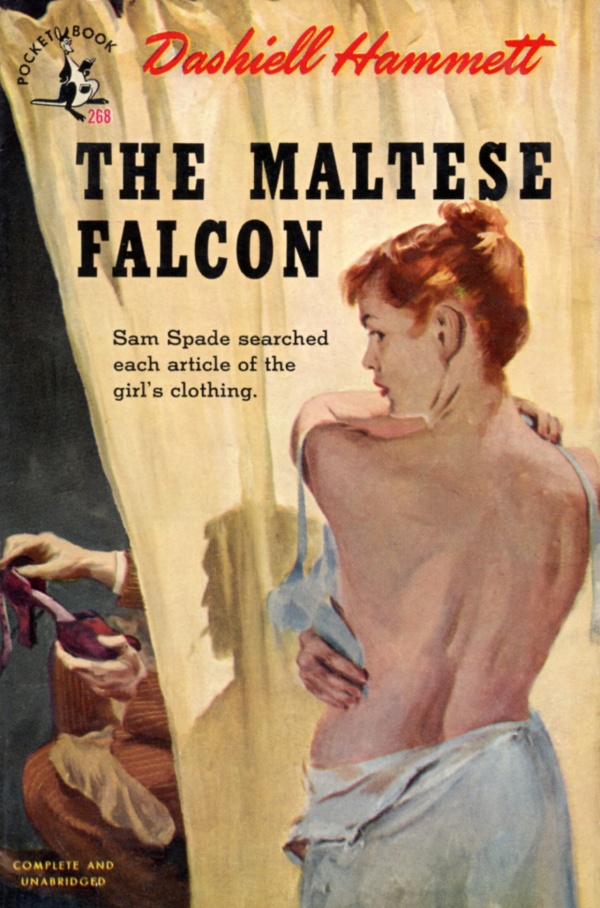
CLASSIC PULP FICTION COVERS: FROM THE MALTESE FALCON TO THE HOUND OF THE BASKERVILLES


....Yesterday we wrote of the low opinions the eminent J.R.R. Tolkien and his friend C.S. Lewis held for the “vulgar” creations of Walt Disney. As a counterpoint to their disdain for popular entertainment, we might turn—as writer Steven Graydanus does in Disney's defense—to their contemporary, the Catholic apologist and prolific essayist, journalist, poet, and writer of detective novels and short stories, G.K. Chesterton.
But we aren't talking Disney here, but hard-boiled pulp fiction, a genre I think Chesterton would have liked. Chesterton’s work “was entirely popular in nature,” notes Graydanus. He was “a great defender of popular and even ‘vulgar’ culture." Take his essay “A Defense of Penny Dreadfuls,” which begins:
One of the strangest examples of the degree to which ordinary life is undervalued is the example of popular literature, the vast mass of which we contentedly describe as vulgar. The boy's novelette may be ignorant in a literary sense, which is only like saying that modern novel is ignorant in the chemical sense, or the economic sense, or the astronomical sense; but it is not vulgar intrinsically--it is the actual centre of a million flaming imaginations.
Sentiments like these inspired admirers of Chesterton like Marshall McLuhan and Jorge Luis Borges to take seriously the mass entertainments of their respective cultures.


READ MORE:
http://www.openculture.com/2018/05/pulp-covers-for-classic-detective-novels-by-dashiell-hammett-arthur-conan-doyle-agatha-christie-raymond-chandler.html

3.01.2018

Pablo Neruda’s Poem, “The Me Bird,” Becomes a Short, Beautifully Animated Film


From 18bis, a Brazilian design & motion graphics studio, comes this: an animated interpretation of “The Me Bird," a poem by the Nobel Prize-winning poet Pablo Neruda. Writes 18bis, “The inspiration in the strata stencil technique helps conceptualize the repetition of layers as the past of our movements and actions. The frames depicted as jail and the past as a burden serve as the background for the story of a ballerina on a journey towards freedom. A diversified artistic experimentation recreates the tempest that connects bird and dancer." It's all pretty wonderful.

Via www.openculture.com
 

3.24.2017

The Beauty of Jean Cocteau’s ‘La Belle et la Bête’ ( The tale’s magic began on film, with Jean Cocteau).


...In his collected essays in The Art of Cinema, Cocteau coins his essays on cinema under the cine-poetry term, calling them Poésie de cinéma. As Robin Buss notes in his introduction to the collection, Cocteau “asserts that the underlying mechanism of cinema is like that of dreams.” Cocteau is neither a filmmaker nor a playwright nor a writer, but a poet; and to him, poets operated not just in the form of poetry, but in the form of dreams. Importantly to him, however, cinematic poetry is not “deliberately ‘poetic’” (which steered into the world of elitist art cinema, according to Cocteau), but derivative from the real and the unreal; from what audiences believe and what they see.
What Cocteau allows his audience to see in La Belle et la Bête can either be seen as a manipulation of his viewer or his ability to use the technicalities of filmmaking as a form of magic. For example, Cocteau has described how he persuaded Alekan “to shoot Jean Marais, as the Prince, in as saccharine a style as possible. The trick worked. When the picture was released, letters poured in from matrons, teenage girls and children, complaining to me and Marais about the transformation.” A conflict between the artistic and the technical emerges here, as the ugliness of the Prince reminds the viewer of the lure and attractiveness of the Beast.

Yet, for the Beast’s actor Jean Marais (who also played what would be Disney’s version of Gaston, Avenant, and the Beast-turned-prince), the costume of the Beast was so uncomfortable that Marais developed painful sores while his skin was damaged by the glue used to keep the fur on his body. For Jean Marais — a person who looks more like a Greek sculpture than a mere human — turning into the Beast brought pain and ugliness for the actor, while for Josette Day’s Belle, and for the audience, the pain only came once the Beast had vanished, left only with the uncomfortably real-looking Marais. In fact, there’s the now well-known story that Marlene Dietrich, upon seeing the shimmering prince, called “where is my beautiful Beast?” The technical is turned into poetry here, with Marais’ real-life pain mirroring both the Beast’s internal struggle as well as the pain audiences feel upon seeing the prince.

https://filmschoolrejects.com/jean-cocteau-la-belle-et-la-bete-retrospective-f08cbd27a96f#.ylyo3wj62 


BRIAN DE PALMA SUPERCUT: GOD'S EYE


...In the following supercut from La Cinematheque Francaise, most-all the god’s-eye view shots (more like Dutch tilts) from DePalma’s filmography have been assembled to reveal the various impacts the shot has on his particular brand of storytelling.