12.06.2018
"DECEMBER RIOTS": A FILM ABOUT POLICE BRUTALITY AND THE MURDER IN COLD BLOOD OF A 15 YEAR-OLD STUDENT
"DECEMBER RIOTS" AUTOPSY CLIP. MUSIC BY MOBY. from Dimitri Vorris on Vimeo.
"December
Riots is important, timely, and hits it's mark. Acclaimed Greek-born
filmmaker Dimitri Vorris has beautifully interwoven fact and fiction, to
create a dramatic tale, that is both horrifying and thought-provoking".
Christopher Martini, Director-Producer "The Stone Child", "Trooper"
Amos Poe, Filmmaker, Leading figure of the No Wave Cinema Movement, "UNMADE BEDS", "THE FOREIGNER", "SUBWAY RIDERS", "EMPIRE II", "THE GUITARS", "ROCKET GIBRALTAR"
“... Independent, handmade, and made possible with countless fights on the side of its creator, December Riots,
comes to remind us the life we never lived, the fight we never fought and the reasons we got here, with bowed heads and humiliated lives ... "
Chrisostomakis Laktaridis, DOCTV.GR
TIME magazine readers voted protesters—from Occupy Wall Street to the violent streets of Athens—as Person Of The Year and “DECEMBER RIOTS,” written, produced and directed by Dimitri Vorris, depicts exactly that.
The film's epicenter is the cold-blooded execution of 15 year-old student Alexander Gregoropoulos by two policemen in a downtown Athens café on December 6, 2008. "December Riots," is a film about the Gregoropoulos killing, an incident that sparked riots in over seventy cities and twenty-two countries worldwide including the US. The filmmaker acquired exclusive access to never-before-seen court documents and evidence from the trial that followed Gregoropoulos’s killing. The independently financed, claustrophobic thriller, focuses on a group of Europeans and Americans trapped in an art-house movie theater in downtown Athens during the 2008 riots.
The film is featuring four tracks courtesy of electronica superstar Moby.
9.19.2018
ΠΕΝΤΕ ΧΡΟΝΙΑ ΑΠΟ ΤΗN ΠΡΟΜΕΛΕΜΕΤΗΜΕΝΗ ΔΟΛΟΦΟΝΙΑ ΤΟΥ ΠΑΥΛΟΥ ΦΥΣΣΑ....
...Οι δολοφόνοι του κυκλοφορούν ελεύθεροι. Η δίκη συνεχίζεται, όταν δεν διακόπτεται λόγω ελλείψεως στέγης. Δεν έχει μπεί κανείς φυλακή από τους σχεδόν 90 κατηγορούμενους. Οι κατηγορούμενοι ούτε καν μπαίνουν στον κόπο να παρουσιάζονται στο δικαστήριο. Ελεύθερα κυκλοφορούν και τα στελέχη, και οι βουλευτές, της Χρυσής Αυγής παρόλο που κατηγορούνται για "...σύσταση και λειτουργία εγκληματικής οργάνωσης". Φυσικά για τους τελευυταίους οι μισθοί "πέφτουν" κάθε μήνα κανονικά από τα κορόιδα τους φορολογούμενους. Κατά τα άλλα "Δικαιοσύνη Για ΄Ολους" που έλεγε και ο τίτλος της κινηματογραφικής ταινίας.
Shortly after midnight on 18 September 2013, Pavlos Fyssas, a young Greek anti-fascist rapper, was murdered in his home neighbourhood of Keratsini, Athens. The killer and others who participated in the attack were members of the neo-Nazi organisation Golden Dawn. Golden Dawn have brutally attacked migrants and political opponents ever since their formation in the late ‘80s, with most of their crimes going unpunished through the silent support of the Greek police aligned to their nationalist cause. Following the murder of Fyssas, a Greek citizen, the government was finally forced to make a series of arrests. Sixty-nine members of Golden Dawn, including all of their fifteen parliamentarians, were brought to trial. Charges in the trial, relating to events as far back as 2008, allege that even while holding seats in the Greek parliament, Golden Dawn operated as a criminal organisation. Even as the ongoing trial threatens the existence of Golden Dawn as a political party, the Greek courts remain reluctant to investigate the role of the police in covering up these crimes.
Forensic Architecture was commissioned by the Fyssas family and their legal representatives to reconstruct the events of the night from the audio and video material made available to the court. The resulting video investigation and accompanying report, presented to the Athens courtroom on 10 and 11 September 2018, brings together CCTV footage, recordings of communications between police and emergency services, and witness testimony. We established a precise timeline and reconstruction of the events that led to the murder. The investigation established that members of Golden Dawn, including senior officials, acted in a co-ordinated manner in relation to the murder, and that DIAS officers were present at the scene before, during and after the murder, and failed to intervene.
Συμπεράσματα
Από το αποτέλεσμα της μελέτης προέκυψε το ακριβές χρονοδιάγραμμα της δολοφονίας και η σχετική θέση των εμπλεκόμενων προσώπων: του θύματος, των δραστών και της αστυνομίας.Από το συγχρονισμένο υλικό παρατηρήθηκαν τα εξής:
1) Η άφιξη τεσσάρων αστυνομικών μοτοσυκλετών της ομάδας ΔΙ.ΑΣ. στις 23:58:11. Σημειώνεται ότι περίπου τρία λεπτά αργότερα οι αστυνομικοί δήλωσαν στο εσωτερικό σύστημα επικοινωνίας τους ότι ήταν μόνο μία ομάδα (2 μοτοσυκλέτες/4 αστυνομικοί) παρούσα. Επίσης στις καταθέσεις τους δήλωσαν ότι έλαβαν την κλήση για να παρέμβουν μόνο στις 23:59.
2) Η άφιξη μίας πομπής αυτοκινήτων και μοτοσυκλετών με κατεύθυνση από την λεωφόρο Σαλαμίνος (που οδηγεί στα γραφεία της Χρυσής Αυγής Νίκαιας) προς την καφετέρια Κοράλλι (όπου ξεκίνησε η εμπλοκή) στις 23:59:08. Το πρώτο εκ των αυτοκινήτων ταιριάζει στην περιγραφή του αυτοκινήτου του Γ. Ρουπακιά – ένα ασημί Nissan Almera.
3) Στις 23:59:40 οι τέσσερις αστυνομικές μοτοσυκλέτες ξαναεμφανίσθηκαν επί της οδού Τσαλδάρη – εκτιμάται ότι έκαναν τον κύκλο του οικοδομικού τετραγώνου (γεγονός που δεν μεταβίβασαν στο κέντρο τους ούτε ανέφεραν στις καταθέσεις τους).
4) Στις 00:01:49 φάνηκαν άτομα να τρέχουν επί της οδού Τσαλδάρη και να στρίβουν.
5) Παρατηρήθηκε επίσης η άφιξη ενός αυτοκινήτου ασημί Nissan Almera, ο οδηγός τους οποίου, εκτιμάται ότι ήταν ο Γ. Ρουπακιάς, ο οποίος εξήλθε κοίταξε προς το σημείο του εγκλήματος και ύστερα ξαναμπήκε στο αυτοκίνητο, έκανε οπισθογωνία και εισήλθε στην οδό Τσαλδάρη ενάντια στο ρεύμα της κυκλοφορίας (00:02:10-00:03:00).
6) Η δολοφονία υπολογίζεται ότι έλαβε χώρα μεταξύ των 00:03:23 και 00:04:06.
7) Εντός του χρονικού πλαισίου της δολοφονίας, στις 00:03:35, ένας εκ των αστυνομικών διαβίβασε στο κέντρο επιχειρήσεων της ΔΙ.ΑΣ. ότι προσπαθούν να χωρίσουν τα άτομα.
8) Στις 00:05:20, οι αστυνομικοί διαβίβασαν στο Κέντρο επιχειρήσεων της ΔΙ.ΑΣ. ότι ο Παύλος Φύσσας είχε τραυματιστεί.
Διαβάστε ολόκληρη την έκθεση του ερευνητικού κέντρου Forensic Architecture
9.17.2018
Camera Angles Movement: Rules of the Game, by Jean Renoir
Rules of the Game (La Règle du Jeu), directed by Jean Renoir, is one of the greatest movies ever made. In this video I show you how Renoir achieved deep focus cinematography, and how he blocked actors and moved the camera. In the video wolfcrow explains the L movement, actor blocking and camera movement in a breath-taking movie. Renoir was a big influence on Spileberg regarding the "L-system" or "L-movement" of the camera.
9.11.2018
ARROW'S DE NIRO/DE PALMA EARLY FILMS
Arrow Video announced that it will release a Limited Edition Blu-ray box set November 12 (November 13 in the U.S.) called "De Niro & De Palma: The Early Films." The set will include The Wedding Party (new 2K restoration from the original film negative), Greetings (new 2K restoration from original film materials), and Hi, Mom! (new 2K restoration from original film materials). Our old friend Chris Dumas (author of Un-American Psycho) will have a written piece in the set's booklet, and there will be brand new interviews with Charles Hirsch, Gerrit Graham, and Peter Maloney. Also included will be a new (audio?) commentary on Greetings by critic Glenn Kenny, author of Robert De Niro: Anatomy of an Actor. Here are the full details as posted at Screen Anarchy:
NEW UK/US/CA TITLE: De Palma & De Niro: The Early Films (Blu-ray) Brought together for the first time – and each newly restored – these three films offer a fascinating insight into the early careers of two American cinema’s major talents.
... Release dates: 12/13 November
In 1963, Robert De Niro stepped in front of a movie camera for the first time. The resulting film, a low-budget black and white comedy called The Wedding Party, would take three years to complete, and another three years to be released, but it would also establish a hugely important working relationship for the aspiring actor. One of the filmmakers, long before he became synonymous with suspense thanks to Carrie, Dressed to Kill and other classics, was Brian De Palma. He and De Niro would team up again in the next few years for two more comedies, both with a countercultural bent.
Greetings, the first film to receive an X certificate in the United States, is a freewheeling satire focusing on a trio of twentysomething friends – a conspiracy theorist, a filmmaker, and a voyeur played by De Niro – as they try to avoid the Vietnam War draft. Hi, Mom!, originally named Son of Greetings, returns to De Niro’s voyeur, now an aspiring maker of adult films, for another humorous glimpse at late-sixties society, this time turning its attentions to experimental theatre, cinéma vérité, the African American experience, and the white middle classes.
Brought together for the first time – and each newly restored by Arrow Films especially for this release – these three films offer a fascinating insight into the early careers of two American cinema’s major talents. LIMITED EDITION CONTENTS
• Brand new 2K restoration of The Wedding Party from the original film negative, carried out exclusively for this release by Arrow Films
• Brand new 2K restorations of Greetings and Hi, Mom! from original film materials, carried out exclusively for this release by Arrow Films
• Original uncompressed mono soundtracks
• Optional English subtitles for the deaf and hard of hearing on all three films
• Brand new commentary on Greetings by Glenn Kenny, author of Robert De Niro: Anatomy of an Actor
• Brand new appreciation of Brian De Palma and Robert De Niro’s collaborations by critic and filmmaker Howard S. Berger
• Brand new interviews with Charles Hirsch, writer-producer of Greetings and Hi, Mom!
• Brand new interview with actor Gerrit Graham on Greetings, Hi, Mom! and his other collaborations with Brian De Palma
• Brand new interview with actor Peter Maloney on Hi, Mom!
• Hi, Mom! theatrical trailer
• Newly commissioned artwork by Matthew Griffin
• Limited collector’s edition booklet featuring new writing on the films by Brad Stevens, Chris Dumas and Christina Newland, plus an archive interview with Brian De Palma and Charles Hirsch
http://www.angelfire.com/de/palma/blog/
Posted by Geoff at 10:03 PM CDT
8.23.2018
TEN GREAT GERMAN EXPRESSIONIST FILMS FROM M, METROPOLIS, GOLEM, NOSFERATU TO THE CABINET OF DR. CALIGARI AND THE LAST LAUGH
...In 1913, Germany, flush with a new nation’s patriotic zeal, looked like it might become the dominant nation of Europe and a real rival to that global superpower Great Britain. Then it hit the buzzsaw of World War I. After the German government collapsed in 1918 from the economic and emotional toll of a half-decade of senseless carnage, the Allies forced it to accept draconian terms for surrender. The entire German culture was sent reeling, searching for answers to what happened and why.
German Expressionism came about to articulate these lacerating questions roiling in the nation’s collective unconscious. The first such film was The Cabinet of Dr. Caligari (1920), about a malevolent traveling magician who has his servant do his murderous bidding in the dark of the night. The storyline is all about the Freudian terror of hidden subconscious drives, but what really makes the movie memorable is its completely unhinged look. Marked by stylized acting, deep shadows painted onto the walls, and sets filled with twisted architectural impossibilities -- there might not be a single right angle in the film – Caligari’s look perfectly meshes with the narrator's demented state of mind.
- Nosferatu - Free - German Expressionist horror film directed by F. W. Murnau. An unauthorized adaptation of Bram Stoker's Dracula. (1922)
- The Student of Prague - Free - A classic of German expressionist film. German writer Hanns Heinz Ewers and Danish director Stellan Rye bring to life a 19th-century horror story. Some call it the first indie film. (1913)
- Nerves - Free - Directed by Robert Reinert, Nerves tells of "the political disputes of an ultraconservative factory owner Herr Roloff and Teacher John, who feels a compulsive but secret love for Roloff's sister, a left-wing radical." (1919)
- The Cabinet of Dr. Caligari - Free - This silent film directed by Robert Wiene is considered one of the most influential German Expressionist films and perhaps one of the greatest horror movies of all time. (1920)
- Metropolis - Free - Fritz Lang’s fable of good and evil fighting it out in a futuristic urban dystopia. An important classic. An alternate version can be found here. (1927)
- The Golem: How He Came Into the World - Free - A follow-up to Paul Wegener's earlier film, "The Golem," about a monstrous creature brought to life by a learned rabbi to protect the Jews from persecution in medieval Prague. Based on the classic folk tale, and co-directed by Carl Boese. (1920)
- The Golem: How He Came Into the World - Free - The same film as the one listed immediately above, but this one has a score created by Pixies frontman Black Francis. (2008)
- The Last Laugh - Free - F.W. Murnau's classic chamber drama about a hotel doorman who falls on hard times. A masterpiece of the silent era, the story is told almost entirely in pictures. (1924)
- Faust - Free - German expressionist filmmaker F.W. Murnau directs a film version of Goethe's classic tale. This was Murnau's last German movie. (1926)
- Sunrise: A Song of Two Humans - Free - Made by the German expressionist director F.W. Murnau. Voted in 2012, the 5th greatest film of all time. (1927)
- M - Free - Classic film directed by Fritz Lang, with Peter Lorre. About the search for a child murderer in Berlin. (1931)
FRANCOIS HERBERT: A FRENCH ILLUSTRATOR'S PASSION FOR BYZANTIUM
....The Byzantine Empire fell in the mid-15th century (also called Roman Empire East), but something of its
spirit still lives on. A great deal of it lives on in the work of the French illustrator Antoine Helbert. "This passion was kindled by a birthday gift from his mother," writes a blogger named Herve Risson in a post about it.
"This gift was a book about Byzantium. Helbert was 7 years old." Like
many an interest instilled early and deeply enough in childhood,
Helbert's fascination turned into an obsession — or anyway, what looks
like it must be an obsession, since it has motivated him to create such magnificently detailed recreations of Byzantium in its heyday.
Helbert, who only made his first visit to Istanbul at the age of 35, has put in that amount of imaginative work and much more besides. "Since then," writes Risson, Helbert "has taken great care to resurrect the city of the emperors, with great attention to details and to the sources available. What he can’t find, he invents, but always with a great care for the historical accuracy." Indeed, many of Helbert's illustrations don't, at first glance, look like illustrations at all, but more like what you'd come up with if you traveled back to the Constantinople of fifteen or so centuries ago with a camera. "The project has no lucrative goal," Risson notes. "It’s a passion. A byzantine passion.
![]() |
| HAGIA SOPHIA |
Helbert, who only made his first visit to Istanbul at the age of 35, has put in that amount of imaginative work and much more besides. "Since then," writes Risson, Helbert "has taken great care to resurrect the city of the emperors, with great attention to details and to the sources available. What he can’t find, he invents, but always with a great care for the historical accuracy." Indeed, many of Helbert's illustrations don't, at first glance, look like illustrations at all, but more like what you'd come up with if you traveled back to the Constantinople of fifteen or so centuries ago with a camera. "The project has no lucrative goal," Risson notes. "It’s a passion. A byzantine passion.
![]() |
| THE PALACE OF BUCOLEON |
![]() |
| THE TWELVE FEATS OF HERCULES (LITTLE GATE) |
![]() |
| EQUESTRIAN STATUE FOR BYZANTINE EMPEROR JUSTINIAN |
![]() |
| EMPRESS THEODORA |
![]() |
| VIEW OF THE HIPPODROME AND THE GRAND PALACE http://www.openculture.com/2018/08/french-illustrator-revives-the-byzantine-empire.html |
5.07.2018
ATROPA: SCIENCE FICTION TV SERIES TRAILER
ATROPA – Series Trailer – Available Now! from Eli Sasich on Vimeo.
ATROPA: The Series is available NOW on Vivendi's STUDIO+ platform –– download the app and watch all seven episodes today!
In the web serial ATROPA: The Series, off-world detective Cole Freeman (Tony Bonaventura) and the crew of a drifting spaceship face a cosmic mystery that not only redefines their perception of time and space, but also threatens to send them spinning to their doom. A nostalgic throwback to sci-fi films of old, ATROPA: The Series sends its cast of spacefaring characters down grimy ship corridors and confronts them with the dangers of deep space in their perilous quest for universal truth.
ATROPA: The Series began life in 2015, when filmmaker Eli Sasich made a short film — called simply ATROPA — as a pitch for a feature script. Having released the short online, Sasich went through a long development process aimed at bringing the story to the big screen, before ultimately realizing the project as a seven-episode series backed by Vimeo and released through Vivendi’s STUDIO+ platform.
....We had an incredible team who went above and beyond to help bring you something truly special with this short-form series. Many of the folks listed below have been with the project since the original pitch short was shot five years ago! It was a surreal experience to come back together and complete the story. A huge thank you to each and every member of the cast and crew for your hard work and dedication!
Director: Eli Sasich
Writers: Clay Tolbert & Eli Sasich
Producer: Lieren Stuivenvolt Allen
Producer: Chris Bryant
Executive Producers: Eli Sasich, Clay Tolbert
Director of Photography: Greg Cotten
Production Designer: Alec Contestabile
Editors: Zach Anderson, Adam Van Wagoner
Original Music by: Kevin Riepl
Costume Designer: Dagmarette Yen
Visual Effects Supervisor: Ryan Wieber
Spaceship Visual Effects Supervisor: Tobias Richter
Spaceship Visual Effects by: The Light Works
Earth Sequence Visual Effects Supervisor: Matt Hoffman
Earth Sequence Visual Effects by: BluFire Studios
Associate Producers: Kevin Riepl, Ryan Wieber, Greg Cotten, Chris Sasich
CAST:
Tony Bonaventura
Jeannie Bolet
Ben Kliewer
Chris Voss
David M. Edelstien
Ewan Chung
Kevin Swanstrom
Amir Malaklou
Featuring Michael Ironside as 'Captain Schreiber'
STUDIO+
Corridor Productions
In Association with VIMEO
Studio71
Unit Production Manager: Lieren Stuivenvolt Allen
1st AD: Boman Modine
2nd AD: Nathaniel David Shriver
Script Supervisor: Steve Montal
Art Director: Clayton Beisner
Set Decorator: Sophie Peter
Property Master: Robert St Laurent
1st AC: Brian White
2nd AC / DIT: Ryan Summersett
Gaffer: Arjun Prakash, Jeff Godshall,
Colorist: Tashi Trieu
Hair and Makeup Department Head: Mandy Artusato
Sound Mixer / Boom Operator: Yu-Ting Su
Supervising Sound Editor: Michael Ault
Sound Editors: Leo Magrin, John Maximilian Repka
Additional Sound Editing: Alan Guzman
Orchestration: Susie Benchasil Seiter, Chad Seiter, Kevin Riepl Music
Poster Artist: Paul Shipper – Paul Shipper Studio
Production Assistants: Brendan Peterson, Kevin Swanstrom, Shane Leary, Bradley Specht, Jacob Arzola, Jessica Miller, Daniel Macdonald, Adam Valazquez
Labels:
ATROPA,
ELI SASICH,
TRAILER,
TV SERIES
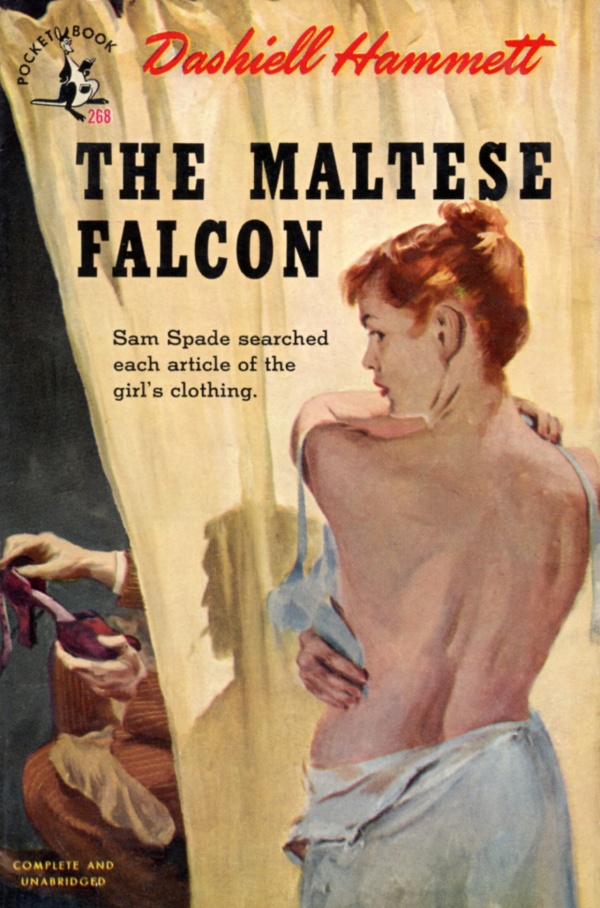
CLASSIC PULP FICTION COVERS: FROM THE MALTESE FALCON TO THE HOUND OF THE BASKERVILLES

....Yesterday we wrote of the low opinions the eminent J.R.R. Tolkien and his friend C.S. Lewis held for the “vulgar” creations of Walt Disney. As a counterpoint to their disdain for popular entertainment, we might turn—as writer Steven Graydanus does in Disney's defense—to their contemporary, the Catholic apologist and prolific essayist, journalist, poet, and writer of detective novels and short stories, G.K. Chesterton.
But we aren't talking Disney here, but hard-boiled pulp fiction, a genre I think Chesterton would have liked. Chesterton’s work “was entirely popular in nature,” notes Graydanus. He was “a great defender of popular and even ‘vulgar’ culture." Take his essay “A Defense of Penny Dreadfuls,” which begins:
One of the strangest examples of the degree to which ordinary life is undervalued is the example of popular literature, the vast mass of which we contentedly describe as vulgar. The boy's novelette may be ignorant in a literary sense, which is only like saying that modern novel is ignorant in the chemical sense, or the economic sense, or the astronomical sense; but it is not vulgar intrinsically--it is the actual centre of a million flaming imaginations.Sentiments like these inspired admirers of Chesterton like Marshall McLuhan and Jorge Luis Borges to take seriously the mass entertainments of their respective cultures.
READ MORE:
http://www.openculture.com/2018/05/pulp-covers-for-classic-detective-novels-by-dashiell-hammett-arthur-conan-doyle-agatha-christie-raymond-chandler.html
3.01.2018
Pablo Neruda’s Poem, “The Me Bird,” Becomes a Short, Beautifully Animated Film
From 18bis, a Brazilian design & motion graphics studio, comes this: an animated interpretation of “The Me Bird," a poem by the Nobel Prize-winning poet Pablo Neruda. Writes 18bis, “The inspiration in the strata stencil technique helps conceptualize the repetition of layers as the past of our movements and actions. The frames depicted as jail and the past as a burden serve as the background for the story of a ballerina on a journey towards freedom. A diversified artistic experimentation recreates the tempest that connects bird and dancer." It's all pretty wonderful.
Via www.openculture.com
3.24.2017
The Beauty of Jean Cocteau’s ‘La Belle et la Bête’ ( The tale’s magic began on film, with Jean Cocteau).
...In his collected essays in The Art of Cinema, Cocteau coins his essays on cinema under the cine-poetry term, calling them Poésie de cinéma.
As Robin Buss notes in his introduction to the collection, Cocteau
“asserts that the underlying mechanism of cinema is like that of
dreams.” Cocteau is neither a filmmaker nor a playwright nor a writer,
but a poet; and to him, poets operated not just in the form of poetry,
but in the form of dreams. Importantly to him, however, cinematic poetry
is not “deliberately ‘poetic’” (which steered into the world of elitist
art cinema, according to Cocteau), but derivative from the real and the
unreal; from what audiences believe and what they see.
What Cocteau allows his audience to see in La Belle et la Bête
can either be seen as a manipulation of his viewer or his ability to
use the technicalities of filmmaking as a form of magic. For example,
Cocteau has described how he persuaded Alekan
“to shoot Jean Marais, as the Prince, in as saccharine a style as
possible. The trick worked. When the picture was released, letters
poured in from matrons, teenage girls and children, complaining to me
and Marais about the transformation.” A conflict between the artistic
and the technical emerges here, as the ugliness of the Prince reminds
the viewer of the lure and attractiveness of the Beast.
Yet, for the Beast’s actor Jean Marais
(who also played what would be Disney’s version of Gaston, Avenant, and
the Beast-turned-prince), the costume of the Beast was so uncomfortable
that Marais developed painful sores while his skin was damaged by the
glue used to keep the fur on his body. For Jean Marais — a person who
looks more like a Greek sculpture than a mere human — turning into the
Beast brought pain and ugliness for the actor, while for Josette Day’s
Belle, and for the audience, the pain only came once the Beast had
vanished, left only with the uncomfortably real-looking Marais. In fact,
there’s the now well-known story that Marlene Dietrich, upon seeing the shimmering prince,
called “where is my beautiful Beast?” The technical is turned into
poetry here, with Marais’ real-life pain mirroring both the Beast’s
internal struggle as well as the pain audiences feel upon seeing the
prince.
https://filmschoolrejects.com/jean-cocteau-la-belle-et-la-bete-retrospective-f08cbd27a96f#.ylyo3wj62
BRIAN DE PALMA SUPERCUT: GOD'S EYE
The Eye in the Sky. Brian de Palma, un cinéma d'hauteur (supercut) from La Cinémathèque française on Vimeo.
...In the following supercut from La Cinematheque Francaise, most-all
the god’s-eye view shots (more like Dutch tilts) from DePalma’s filmography have been assembled
to reveal the various impacts the shot has on his particular brand of
storytelling.
3.06.2017
1.19.2017
KUBRICK AND TARKOVSKY:TWO CINEMATIC GIANTS SIDE BY SIDE.
Two cinematic giants, side by side.
The films included are:
Stanley Kubrick
- Path of Glory (1957)
- Spartacus (1960)
- Lolita (1962)
- Dr. Strangelove (1964)
- 2001: A space odyssey (1968)
- A Clockwork Orange (1971)
- Barry Lyndon (1975)
- The Shining (1980)
- Full Metal Jacket (1987)
- Eyes Wide Shut (1999)
Andrei Tarkovsky
-Ivan's Childhood (1962)
- Andrei Rublev (1966)
- Solaris (1972)
- The Mirror (1975)
- Stalker (1979)
- Nostalghia (1983)
- The Sacrifice (1986)
Music: Max Richter- On the nature of daylight
1.18.2017
THE ANTIKYTHERA MECHANISM:THE WORLD'S FIRST COMPUTER
The video depicts a virtual model of the Antikythera Mechanism by Mogi Vicentini based on the theoretical and mechanical model by Michael T. Wright produced for the Galileo Museum in Florence, Italy.
Learn more at:
http://naturedocumentaries.org/9444/v...
http://naturedocumentaries.org/6294/a...
The Antikythera Mechanism: http://bit.ly/fm4oFK is the oldest known scientific computer, built in Greece at around 100 BCE. Lost for 2000 years, it was recovered from a shipwreck in 1901. But not until a century later was its purpose understood: an astronomical clock that determines the positions of celestial bodies with extraordinary precision. In 2010, we built a fully-functional replica out of Lego. Sponsored by Digital Science: http://www.digital-science.com/ a new division of Macmillan Publishers that provides technology solutions for researchers. Available under a CC-BY-3.0-Unported license.
Antikythera Mechanism Research Project http://www.antikythera-mechanism.gr
VIA http://www.openculture.com/page/2
ANDREI TARKOVSKY: POETIC HARMONY
FURTHER READING AND RESEARCH:
Tarkovsky, A. (1986) 'Sculpting In Time'
Documentary - Sacrifices of Andrei Tarkovsky (2012)
Documentary - Tarkovsky In Italy (1984)
Cinephilia & Beyond - 'Sacrifices of Andrei Tarkovsky'
Essay - Criterion Collection (Andrei Rublev)
Essay Criterion Collection (Solaris)
Nostalghia.com - A collection of interviews and various research material focused on Tarkovsky.
3.18.2016
YOU ONLY LIVE ONCE: In THe Mood Of...
"YOU ONLY LIVE ONCE" generic mood video from DIMITRI VORRIS on Vimeo.
Four women. A major challenge. A life-changing journey.
Four women challenged by breast cancer, meet in a New York hospital. Travelling for a wedding to the Aegean island of Kos, in Greece, the birthplace of Hippocrates, father of (holistic) medicine, they seize the opportunity. Their doomed careers and wrecked personal lives take a turn for the better...
A heartfelt screenplay about finding the courage to change and fall in love again after life (and others) had let you down...
Labels:
GENERIC,
MOOD VIDEO,
yolo,
YOU ONLY LIVE ONCE
YOU ONLY LIVE ONCE: Artemis Simpoulos-author of THE OMEGA DIET-on Greek Diet (part one)
Artemis P. Simopoulos, author of the Omega Diet describes the advantages of the Greek diet for your health. This is part one. Please also watch part two.
Artemis P. Simopoulos, M.D. is the Founder and President of the Center for Genetics, Nutrition and Health, a nonprofit educational organization in Washington, D.C. since 1990. A graduate of Barnard College, Columbia University, with a major in Chemistry, and a graduate of the Boston University School of Medicine, she is a pediatrician and endocrinologist whose research at the National Institutes of Health (NIH) was on the nutritional aspects of genetic and endocrine disorders; evolutionary aspects of diet and fatty acids; and the importance of a balanced ratio of omega-6/omega-3 fatty acids in health and disease and in growth and development.
YOU ONLY LIVE ONCE: Artemis Simpoulos-author of THE OMEGA DIET-on the greatness of Greece
Dr. Artemis Simopoulos is a Founding Member of the International Society for the Study of Fatty Acids and Lipids (ISSFAL) in 1991, Secretary/Treasurer of ISSFAL from 1991 to 1998, and a member of the Editorial Board of the ISSFAL Newsletter from 1994 to 2000. She is the Founder of the International Society of Nutrigenetics/Nutrigenomics (ISNN) and was Past President of ISNN from 2005-2009. She is the author of The Omega Diet (HarperCollins, 1999) and has edited over 50 books and journal supplements, in addition to publishing over 350 scientific papers. She was the editor of the Karger series World Review of Nutrition and Dietetics from 1989-2011.
YOU ONLY LIVE ONCE: Artemis Simopoulos-author of THE OMEGA DIET-on Hipporates and the concept of positive health
...Long time ago #Hippocrates, father of Medicine, in #Kos #Greece invented the concept of #positive #health. How to use your food as medicine and stay healthy and active.
Artemis P. Simopoulos, MD- author of THE OMEGA DIET-on Hippocrates and positive health
https://www.youtube.com/watch?v=I8UYmUKZC_I
Artemis P. Simopoulos, M.D., author of the Omega Diet, introduces us in less than two minutes in the basic principles of the Hippocratic philosophy.
Artemis P. Simopoulos, M.D. is the Founder and President of the Center for Genetics, Nutrition and Health, a nonprofit educational organization in Washington, D.C. since 1990. A graduate of Barnard College, Columbia University, with a major in Chemistry, and a graduate of the Boston University School of Medicine, she is a pediatrician and endocrinologist whose research at the National Institutes of Health (NIH) was on the nutritional aspects of genetic and endocrine disorders; evolutionary aspects of diet and fatty acids; and the importance of a balanced ratio of omega-6/omega-3 fatty acids in health and disease and in growth and development.
Dr. Simopoulos was chair of the Nutrition Coordinating Committee at the National Institutes of Health (NIH) that coordinated all Nutrition Research of the Federal Government in the U.S. in the Office of Science and Technology Policy at the White House. She was consultant to the Office of Consumer Affairs at the White House. Prior to that she was the Executive Secretary of the Division of Medical Sciences at the National Academy of Sciences (NAS) during which time she directed the Asilomar Conference on Recombinant DNA technology. While at the NAS she directed the Committee that developed the report Genetic Screening: Programs, Principles, and Research.
Dr. Simopoulos is a Founding Member of the International Society for the Study of Fatty Acids and Lipids (ISSFAL) in 1991, Secretary/Treasurer of ISSFAL from 1991 to 1998, and a member of the Editorial Board of the ISSFAL Newsletter from 1994 to 2000. She is the Founder of the International Society of Nutrigenetics/Nutrigenomics (ISNN) and was Past President of ISNN from 2005-2009. She is the author of The Omega Diet (HarperCollins, 1999) and has edited over 50 books and journal supplements, in addition to publishing over 350 scientific papers. She was the editor of the Karger series World Review of Nutrition and Dietetics from 1989-2011.
2.07.2016
DREAMS OF DALI: VR VIDEO
Walk Inside a Surrealist Salvador Dalí Painting with This 360º Virtual Reality Video
in Art, Technology | February 5th, 2016
Click on the arrows to get the full 360 degree experience.
I felt as impressed as everyone else did when I saw my first 360-degree video, the technology that allows viewers to “look” in any direction they wish. But most of the 360-degree videos that became popular early simply demonstrated the concept, and as much astonishment as the experience of the concept alone can generate, even more excitement came from thinking about the technology’s potential. It hasn’t taken long for 360-degree videos to look beyond virtual reality — indeed, to look all the way to virtual surreality, as envisioned by perhaps the best-known surrealist of them all, Salvador Dalí.
http://www.openculture.com/2016/02/walk-inside-a-salvador-dali-surrealist-painting-with-this-360o-virtual-reality-video.html
DGA AWARDS 2016
Alejandro G. Inarritu (WINNER)
The Revenant
(20th Century Fox)
Unit Production Managers: Drew Locke, James W. Skotchdopole, Doug Jones
First Assistant Director: Scott Robertson
Second Assistant Directors: Megan M. Shank, Matthew Haggerty, Jeremy Marks
Unit Production Manager: Gabriela Vazquez (Argentina, California, and Montana Unit)
First Assistant Director: Adam Somner (Argentina, California, and Montana Unit)
Second Assistant Directors: Trevor R. Tavares, Jasmine Marie Alhambra (Argentina, California, and Montana Unit)
Second Second Assistant Directors: Brett Robinson, Kasia Trojak (Argentina, California, and Montana Unit)
This is Iñárritu’s fourth DGA Award nomination. He won the DGA Award for Outstanding Directorial Achievement in Feature Film in 2014 for Birdman or (The Unexpected Virtue of Ignorance). He was also nominated in this category for Babel in 2006. He won the DGA Award for Outstanding Directorial Achievement in Commercials for “Best Job” (Procter & Gamble) in 2012.
-
Tom McCarthy
Spotlight
(Open Road Films)
Unit Production Managers: D.J. Carson, Michael Bederman
First Assistant Director: Walter Gasparovic
Second Assistant Director: Penny Charter
Assistant Unit Production Manager: Danielle Blumstein (Boston Unit)
First Assistant Director: Christo Morse (Boston Unit)
Second Assistant Directors: Conte Matal, Kristina Mariko Peterson, Annie Tan, Andrea O’Connor (Boston Unit)
Second Second Assistant Directors: Phil Robinson, Mark Romanelli (Boston Unit)
Additional Second Assistant Director: Scooter Perrotta (Boston Unit)
Location manager: Robert Striem
This is McCarthy’s first DGA Feature Film Award nomination.
-
Adam McKay
The Big Short
(Paramount Pictures)
Unit Production Manager: Louise Rosner
First Assistant Director: Matt Rebenkoff
Second Assistant Director: Amy Lauritsen
Second Second Assistant Director: Cali Pomés
Second Second Assistant Director: Josh Muzaffer (New York Unit)
Location Manager: Michael Kriaris
This is McKay’s first DGA Feature Film Award nomination.
-
George Miller
Mad Max: Fury Road
(Warner Bros.)
Unit Production Manager: Dean Hood
First Assistant Director: PJ Voeten
Second Assistant Directors: Samantha Smith, Wendy Croad, Chris O’Hara
Second Assistant Directors: Eddie Thorne (Syndey Unit), Emma Jamvold (Syndey Unit)
Second Second Assistant Directors: Danielle Blake (Syndey Unit), Joshua Watkins (Syndey Unit)
This is Miller’s first DGA Feature Film Award nomination.
-
Ridley Scott
The Martian
(20th Century Fox)
Unit Production Managers: Francesca Cingolani, Miklós Tóth
First Assistant Director: Raymond Kirk
Second Assistant Directors: Sarah Hood, Bogi Móricz
Second Second Assistant Director: Nick Thomas
This is Scott's fourth DGA Award nomination. He was nominated in this category in 1991 for Thelma and Louise, in 2000 for Gladiator and in 2001 for Black Hawk Down.
Labels:
DGA AWARDS 2016
Subscribe to:
Posts (Atom)